Product Designer
Lattice
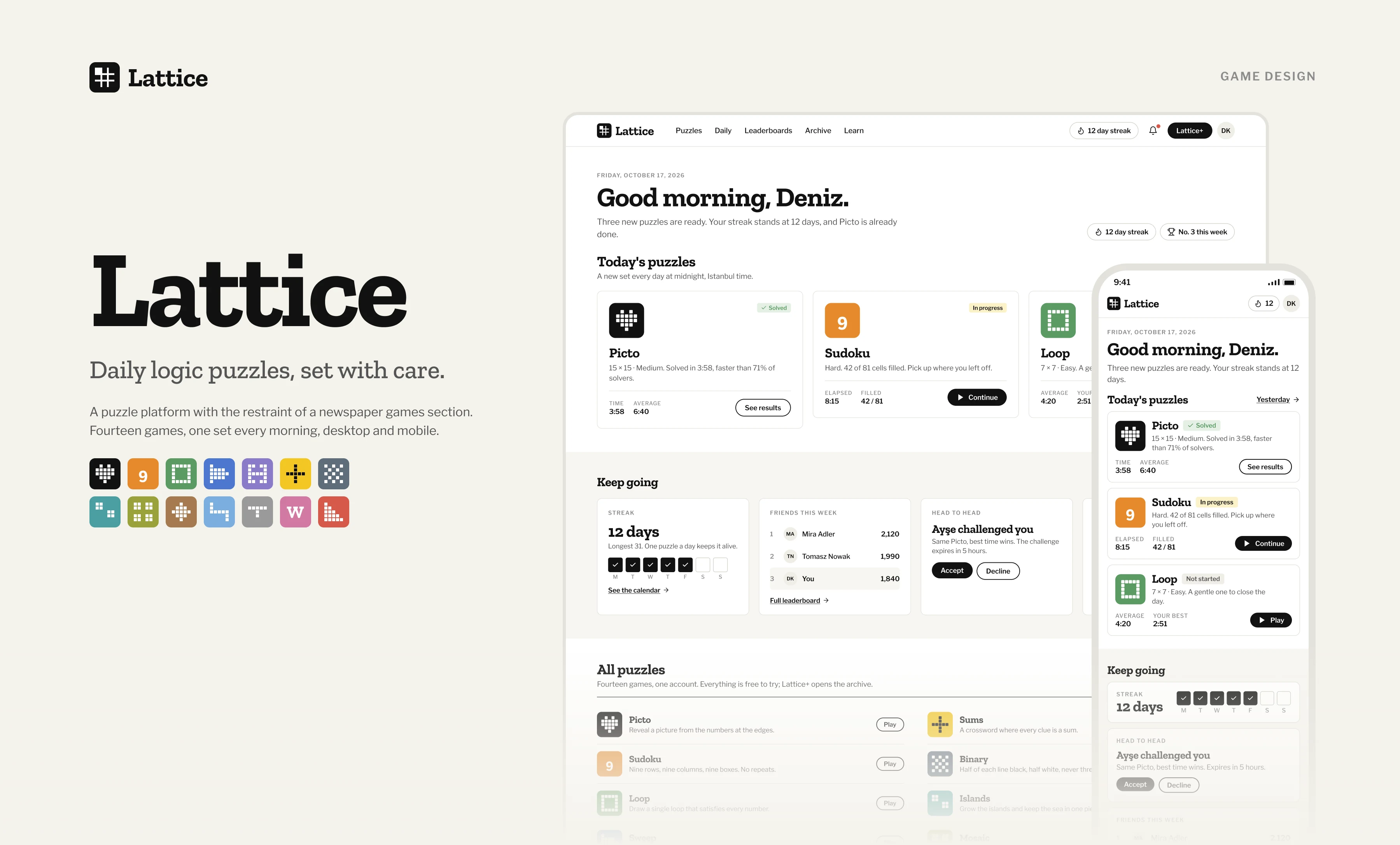
A daily logic puzzle platform with the restraint of a newspaper games section. Fourteen games and fourteen screens, from the morning set to a weekend tournament, designed at desktop and phone size side by side. I wanted it to feel like the puzzle page you look forward to every morning, not an arcade asking for your attention.
Overview
The reference was the games section of a serious newspaper, and the interface borrows its restraint: black type on white, hairlines doing the work that boxes and shadows usually do, and colour only where it carries meaning. Each of the fourteen games is a classic logic puzzle with a new name and a single accent. Picto is a nonogram, Loop is slitherlink, Sweep is minesweeper, and every game gets a square icon drawn as a five by five pixel glyph. There is nothing to buy mid game: no adverts, no energy meters, no pop ups, and the subscription lives on its own page. Zilla Slab sets the titles and the big numbers, and Libre Franklin handles the interface, the clues and the small print.
Home Page
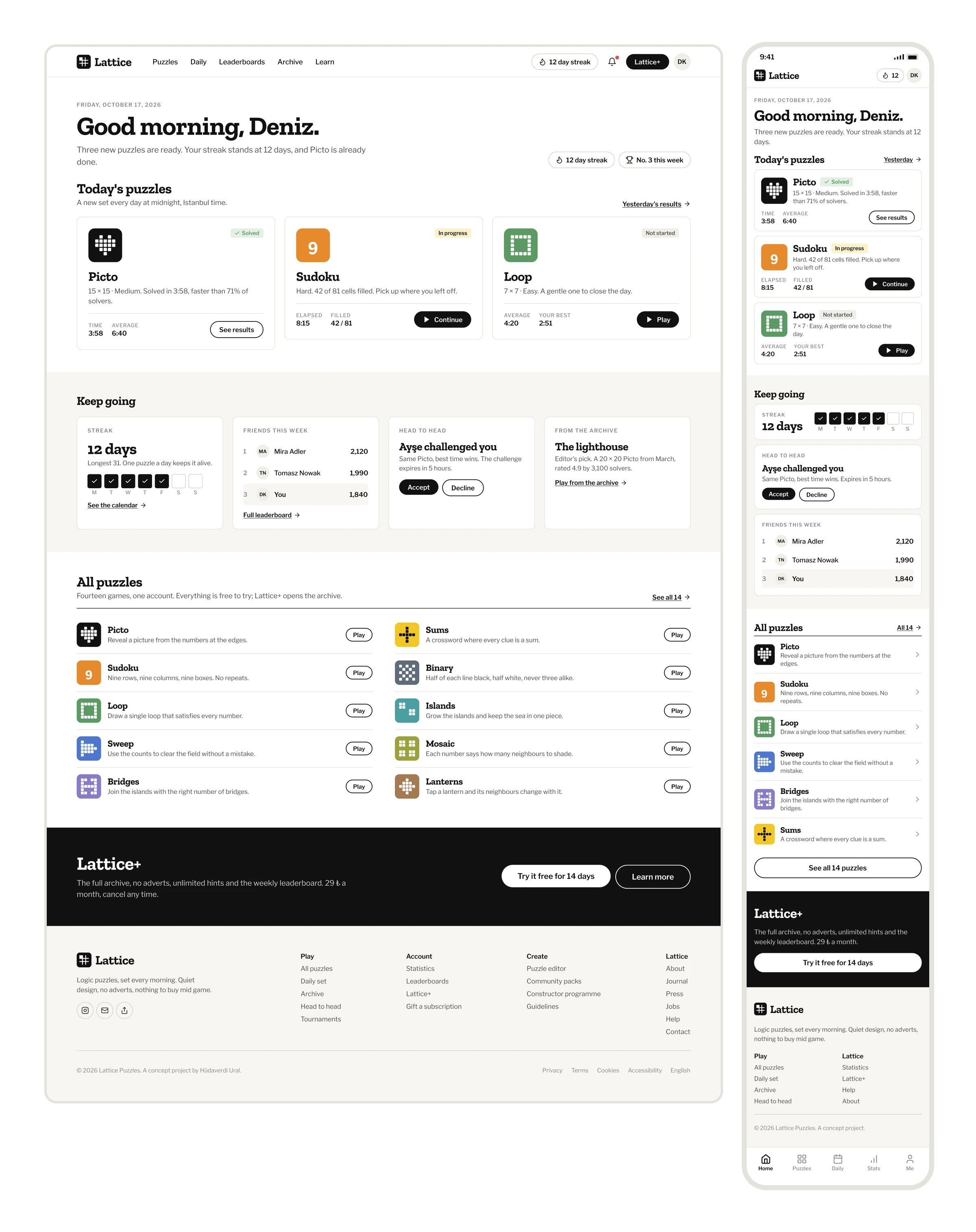
The morning page. A greeting and today’s three puzzles, each one showing at a glance whether it is solved, in progress or not started yet. The streak, friends this week and a head to head challenge come next, and the rest of the library sits under a hairline.
Puzzles
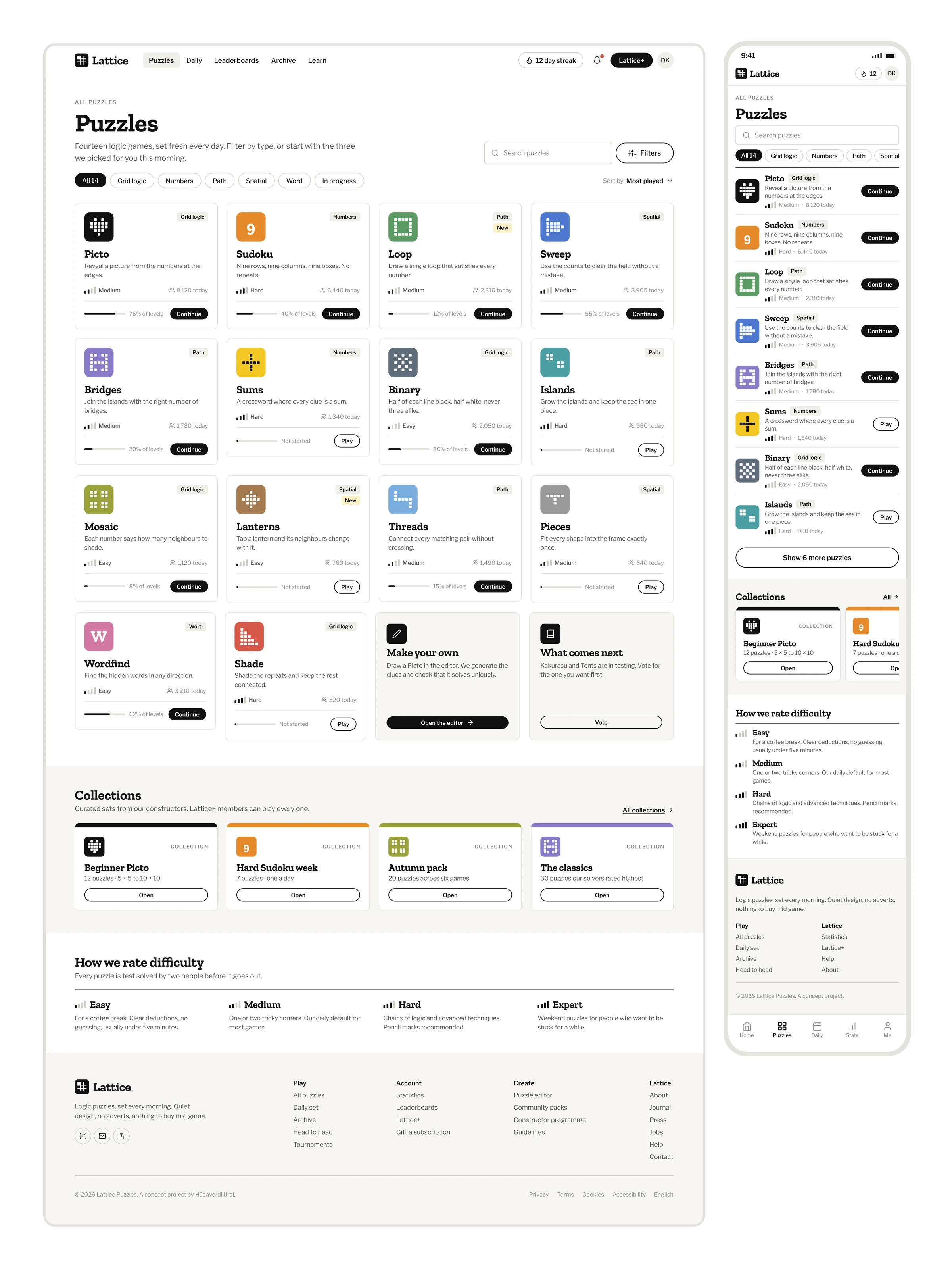
Fourteen games on one grid. Each card carries a category tag, a difficulty bar, how many people played today and your own progress, and nothing louder. Collections and a plain explanation of how difficulty is rated come after.
Picto
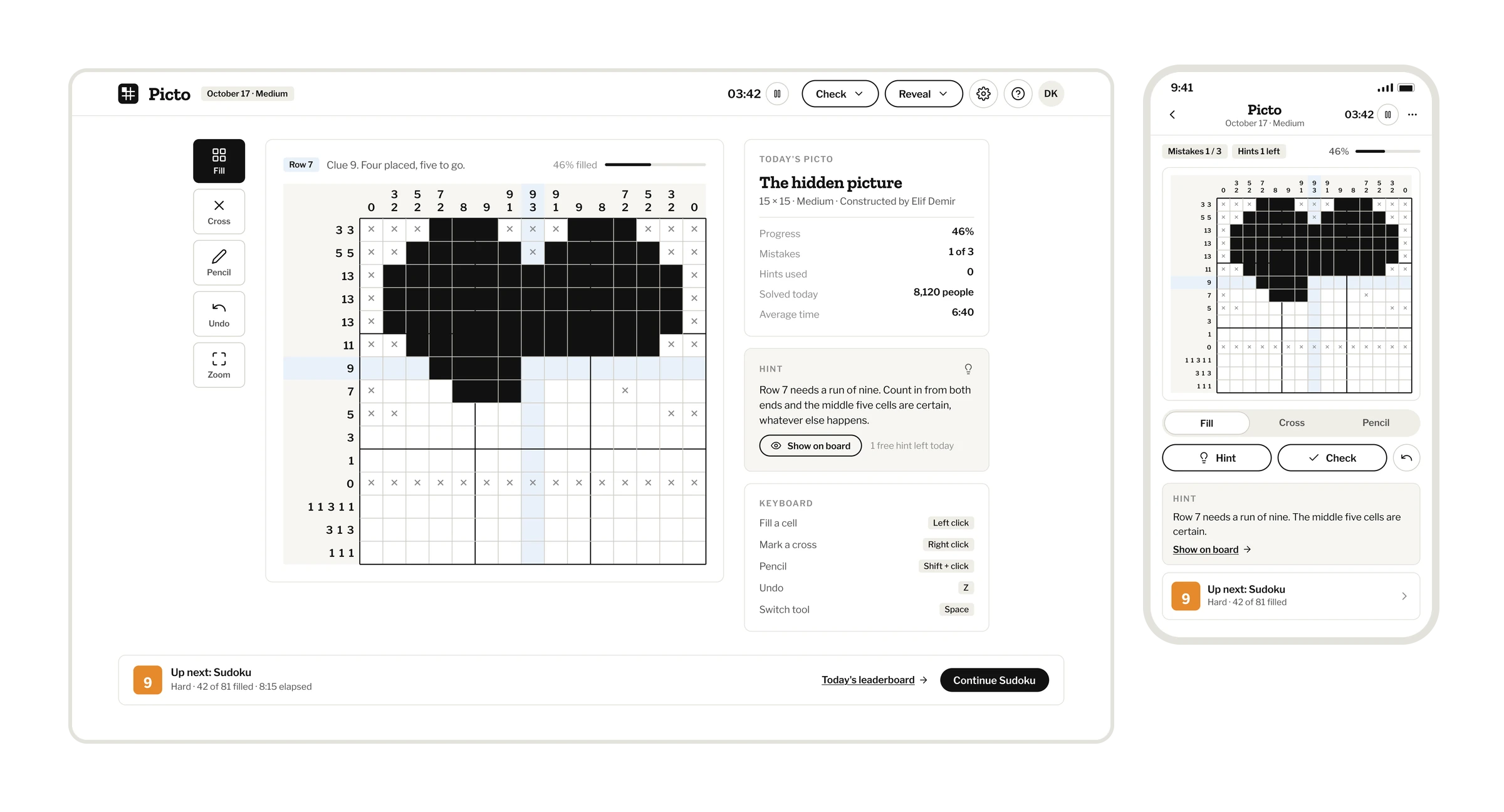
The board owns the screen. The tools sit on the left, today’s puzzle details and the hint sit on the right, and the hint stays quiet until you ask for it. On the phone the tools move under the board, where your thumb already is.
Sudoku
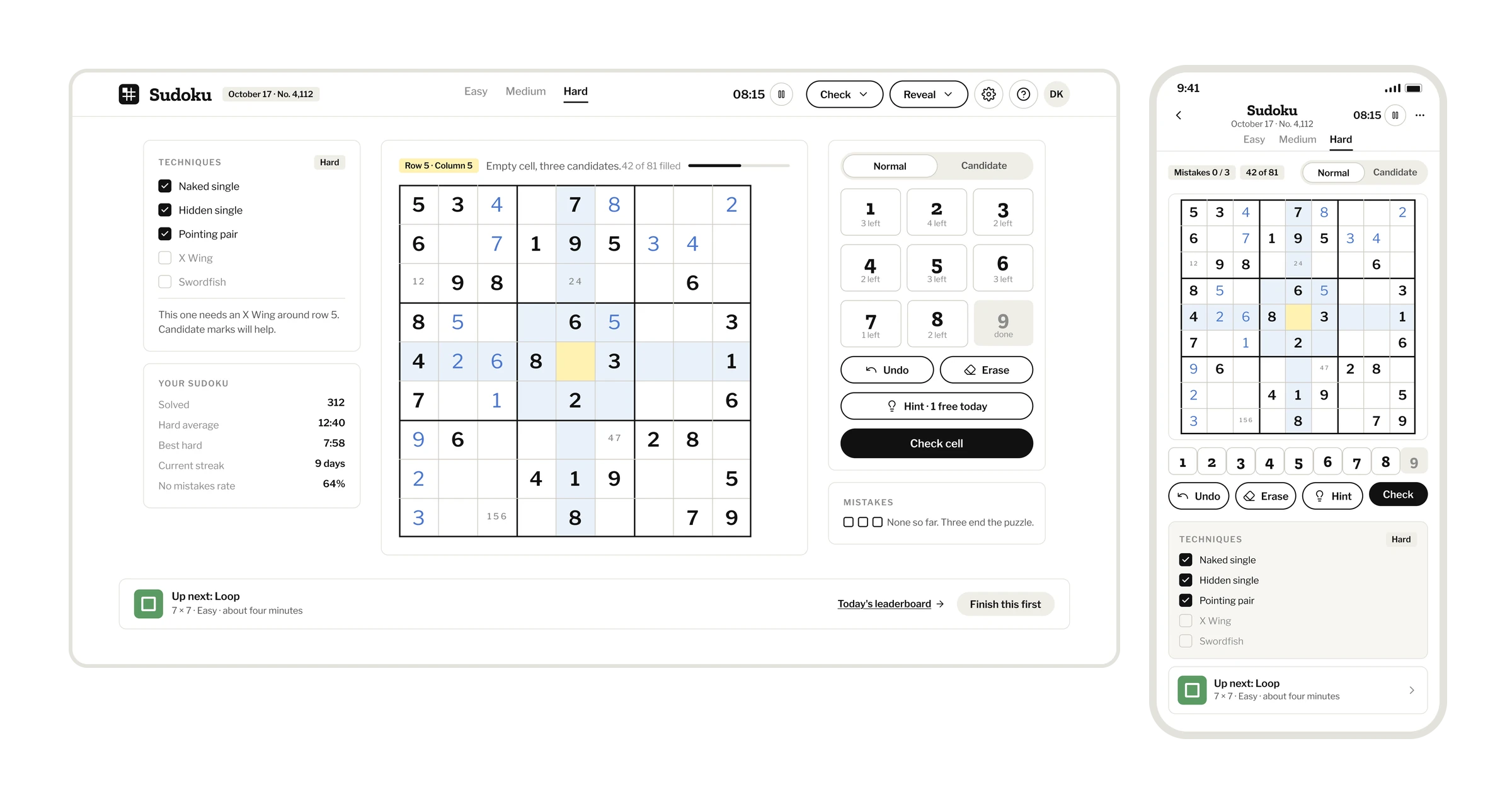
Candidates, counts and a number pad that tells you what is left. Each key shows how many of that number are still to place, and a finished number fades out. The techniques the puzzle needs are listed on the side, with the ones you have already used ticked.
Daily Set
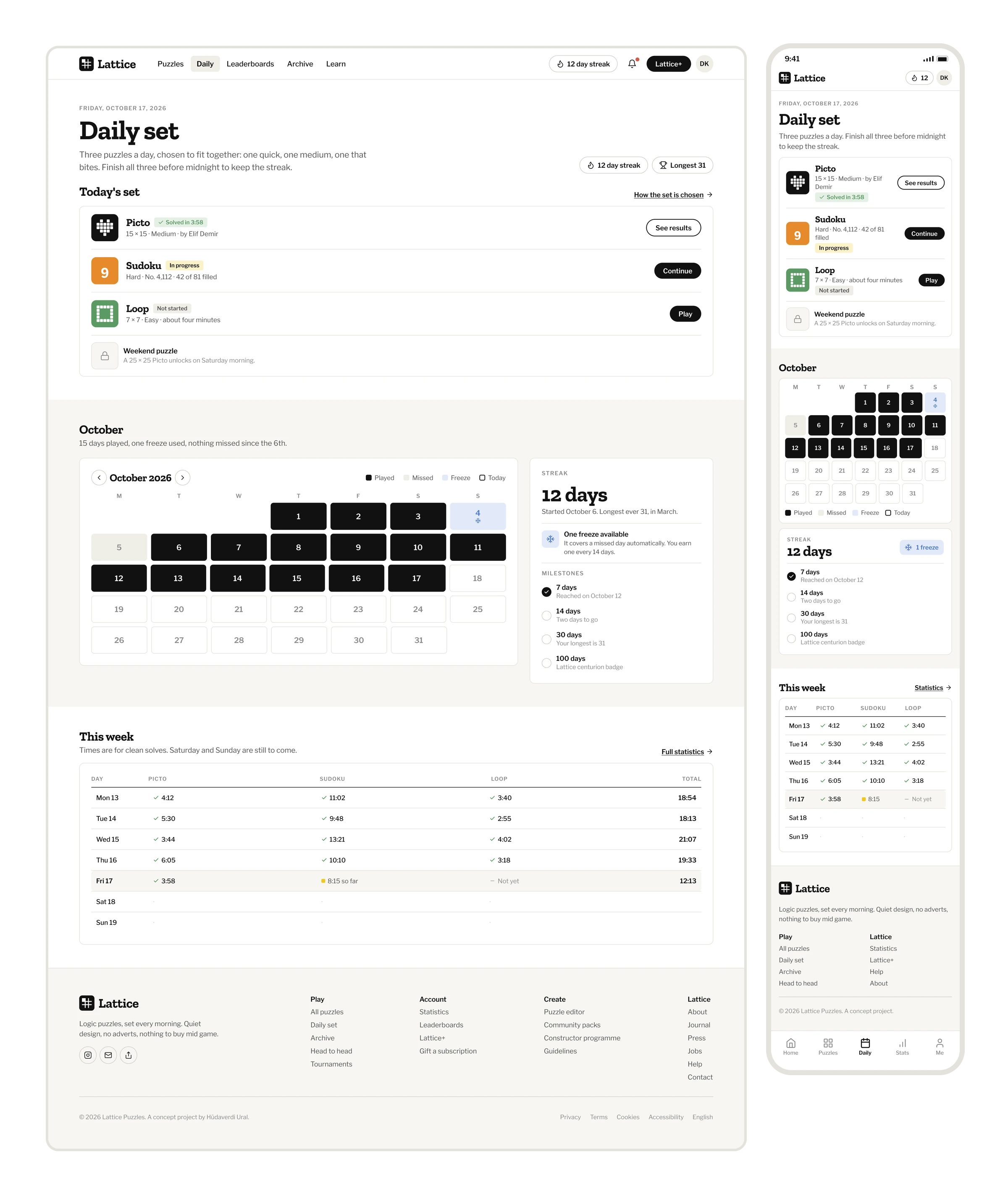
Three puzzles a day, chosen to fit together: one quick, one medium and one that bites. The streak calendar and the week table sit underneath. Black means played, so the whole month reads at a glance.
Archive
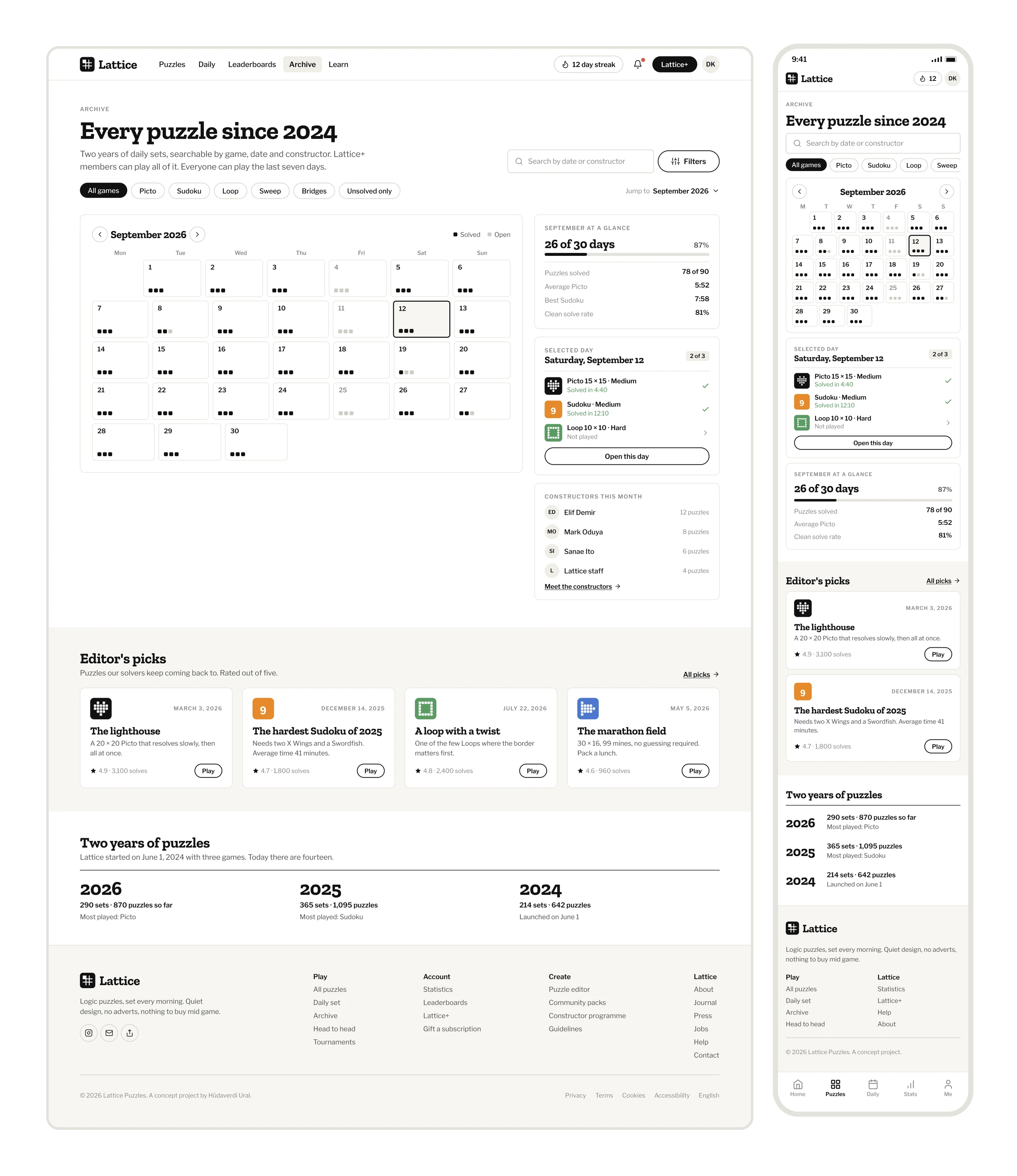
Two years of sets, browsable by month. Three dots under each day say what is left to solve, and picking a day opens its set on the right. Editor’s picks and the yearly totals come after.
Leaderboards
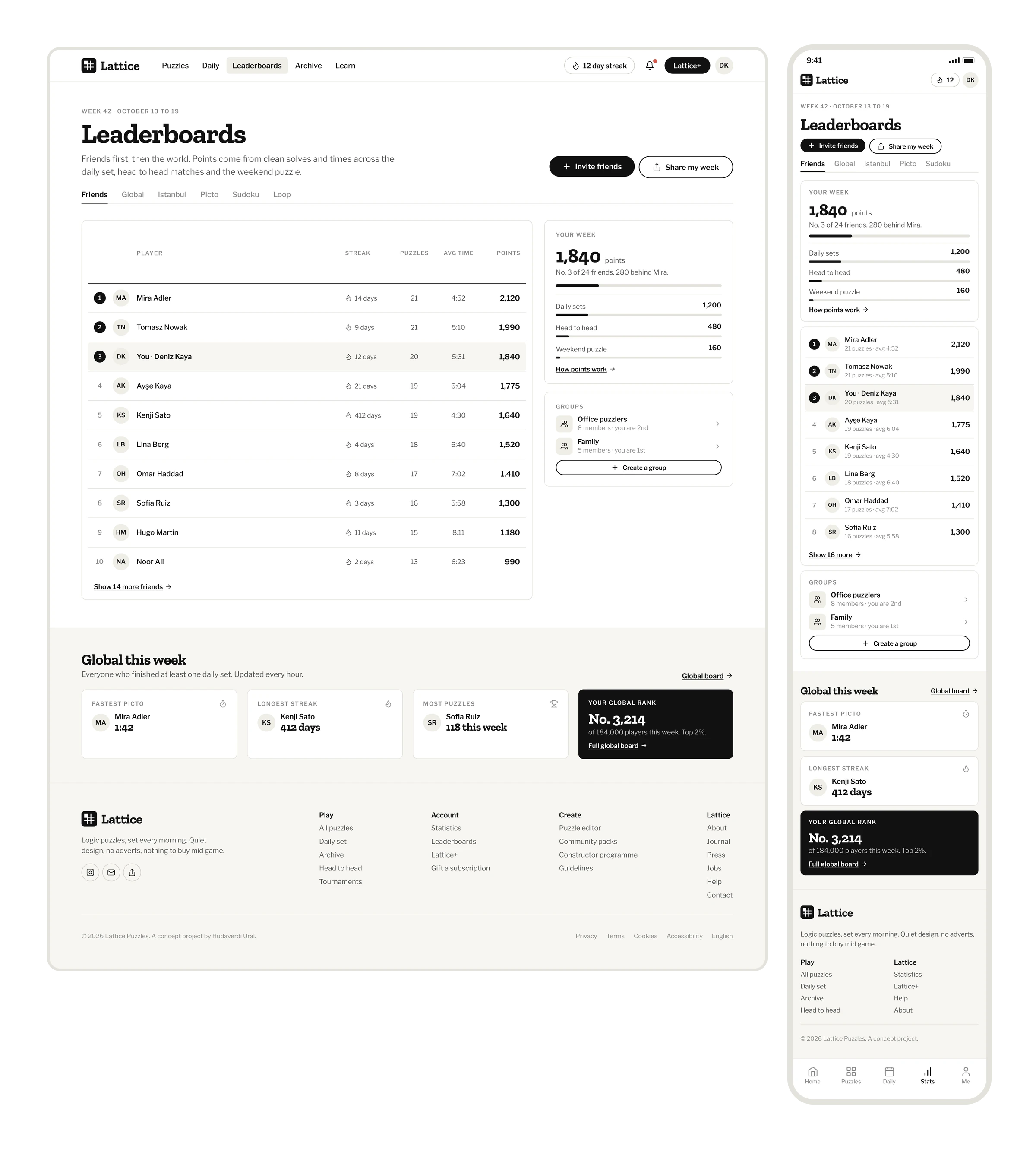
Friends first, then the world. A table, not a podium, with streaks, puzzles, average time and points in plain columns. Your own week sits on the right, with a short note on how points work.
Statistics
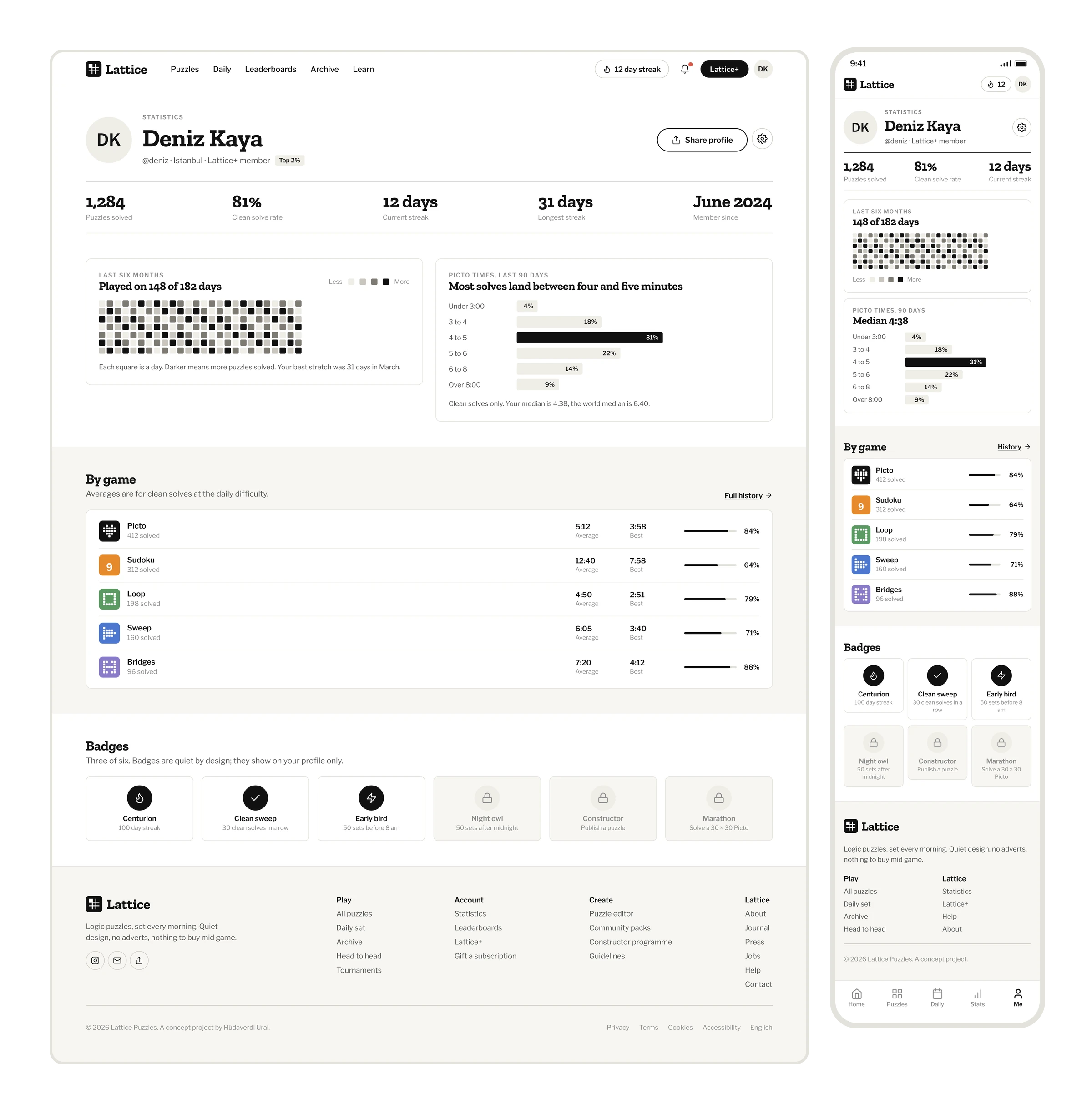
Six months of days as a grid of squares, a time distribution that shows where most solves land, and a row for each game with its average and best time. Badges stay quiet on the profile.
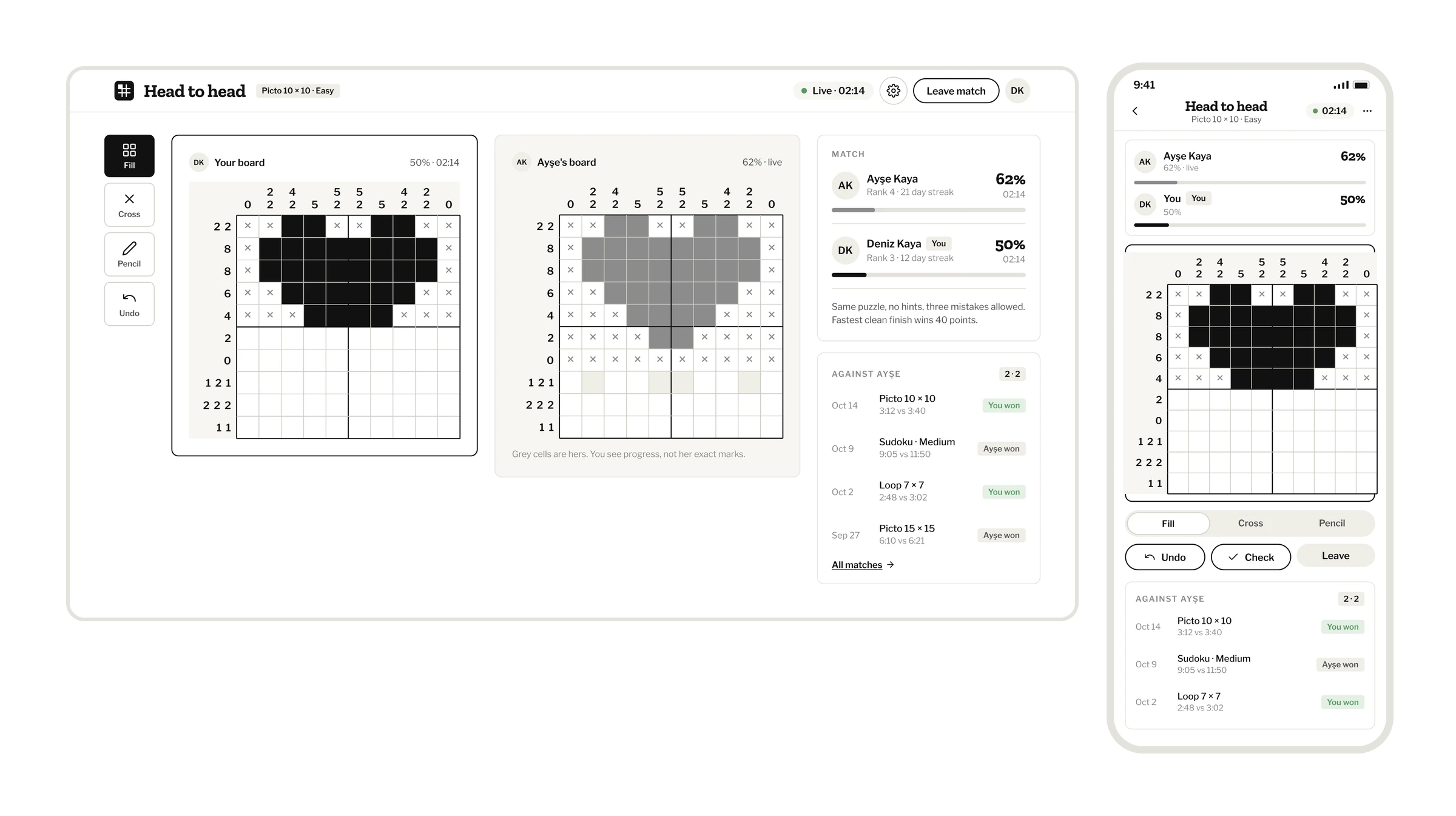
Head to Head
Same puzzle, two boards. You see the other player’s progress in grey but never their exact marks, so it stays a race and not a copy. Past matches against Ayşe sit on the side.
Editor
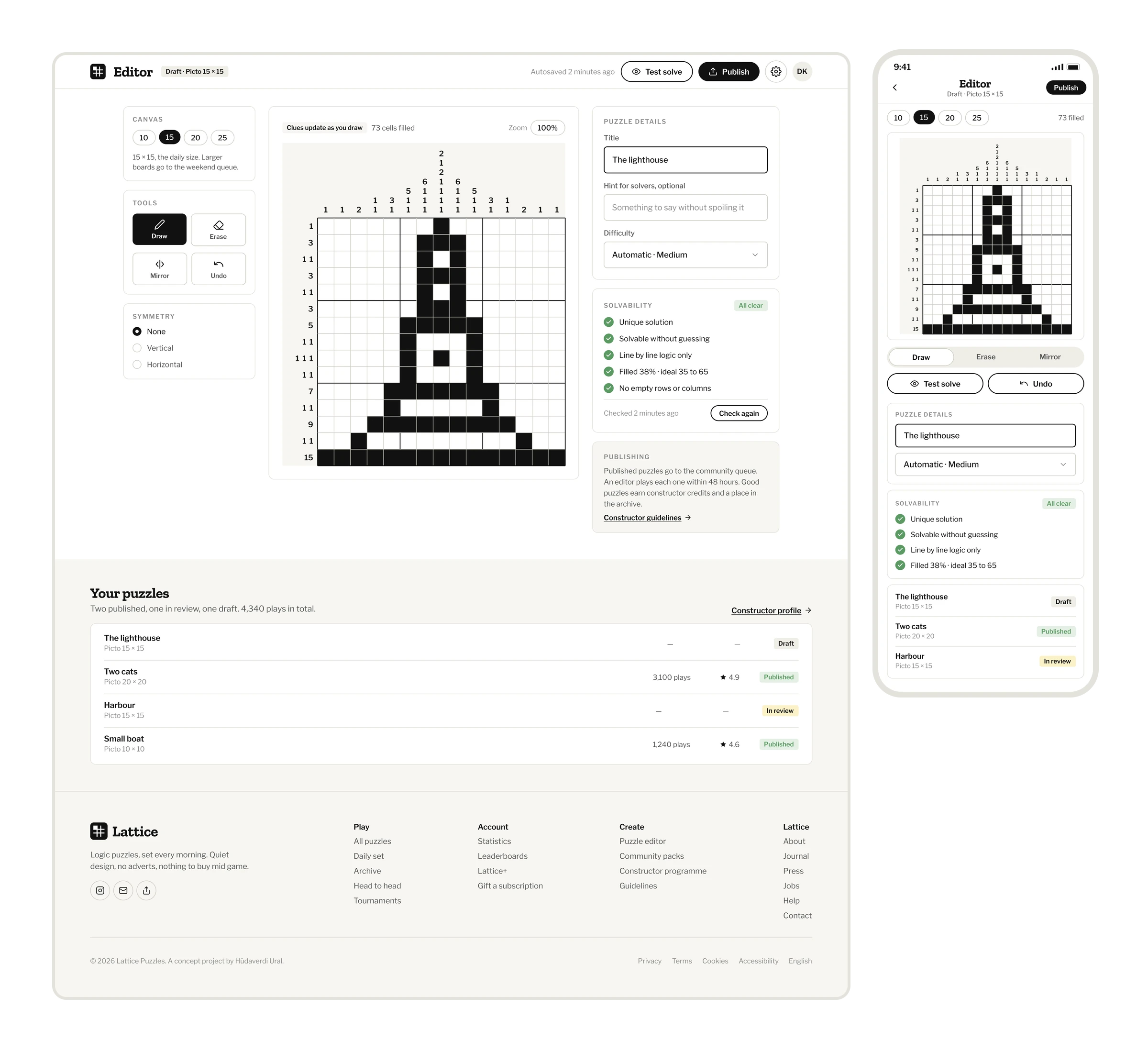
Draw a Picto and watch the clues form as you go. A solvability check runs alongside, and the puzzle can only be published once the solver agrees it is fair. Your published puzzles and their plays sit underneath.
Lattice+
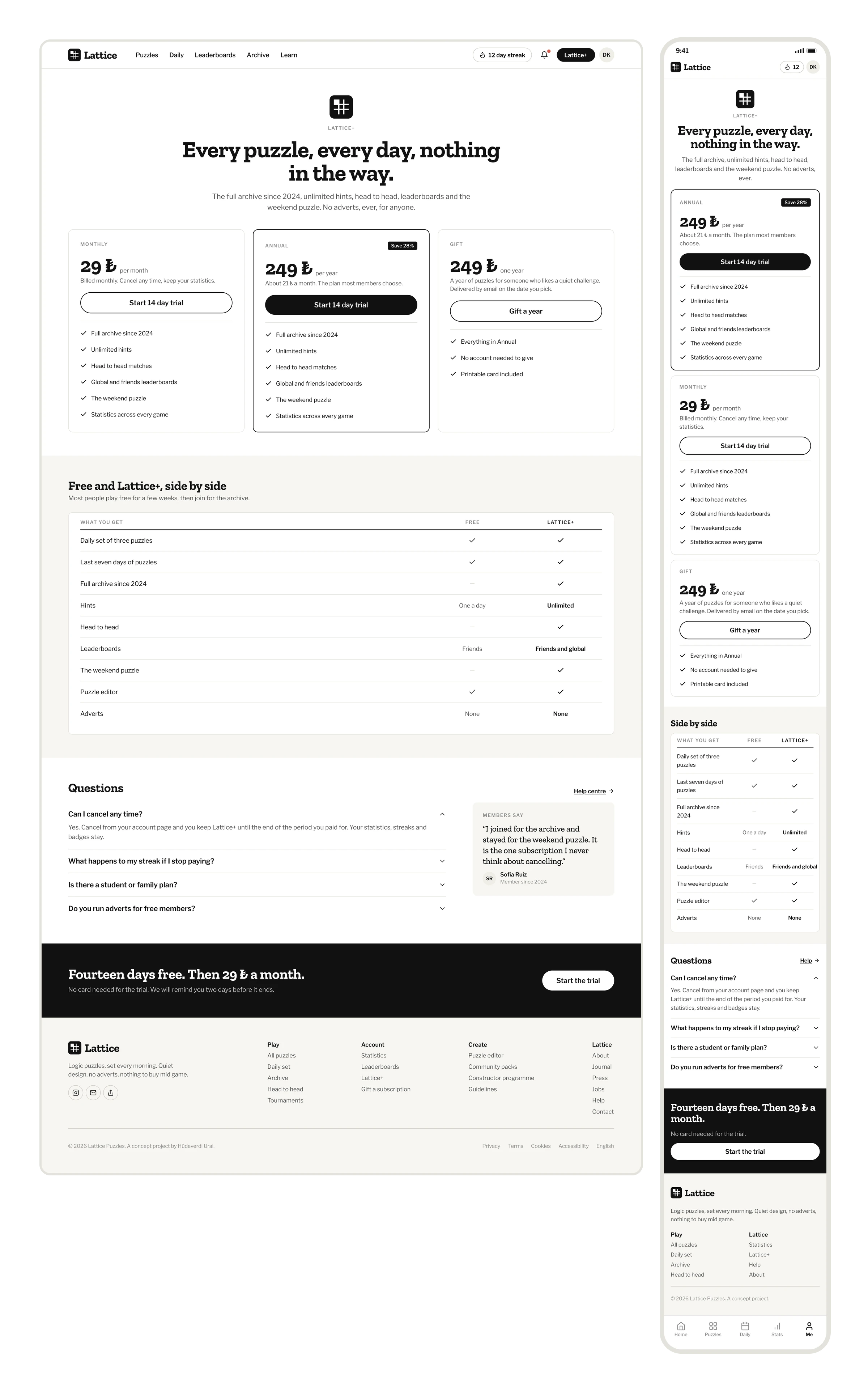
Three plans, one comparison table, no dark patterns. Monthly, annual and a gift, a plain table of what free and paid include, honest answers to the questions people ask before they pay, and a trial that sends a reminder before it ends.
Learn
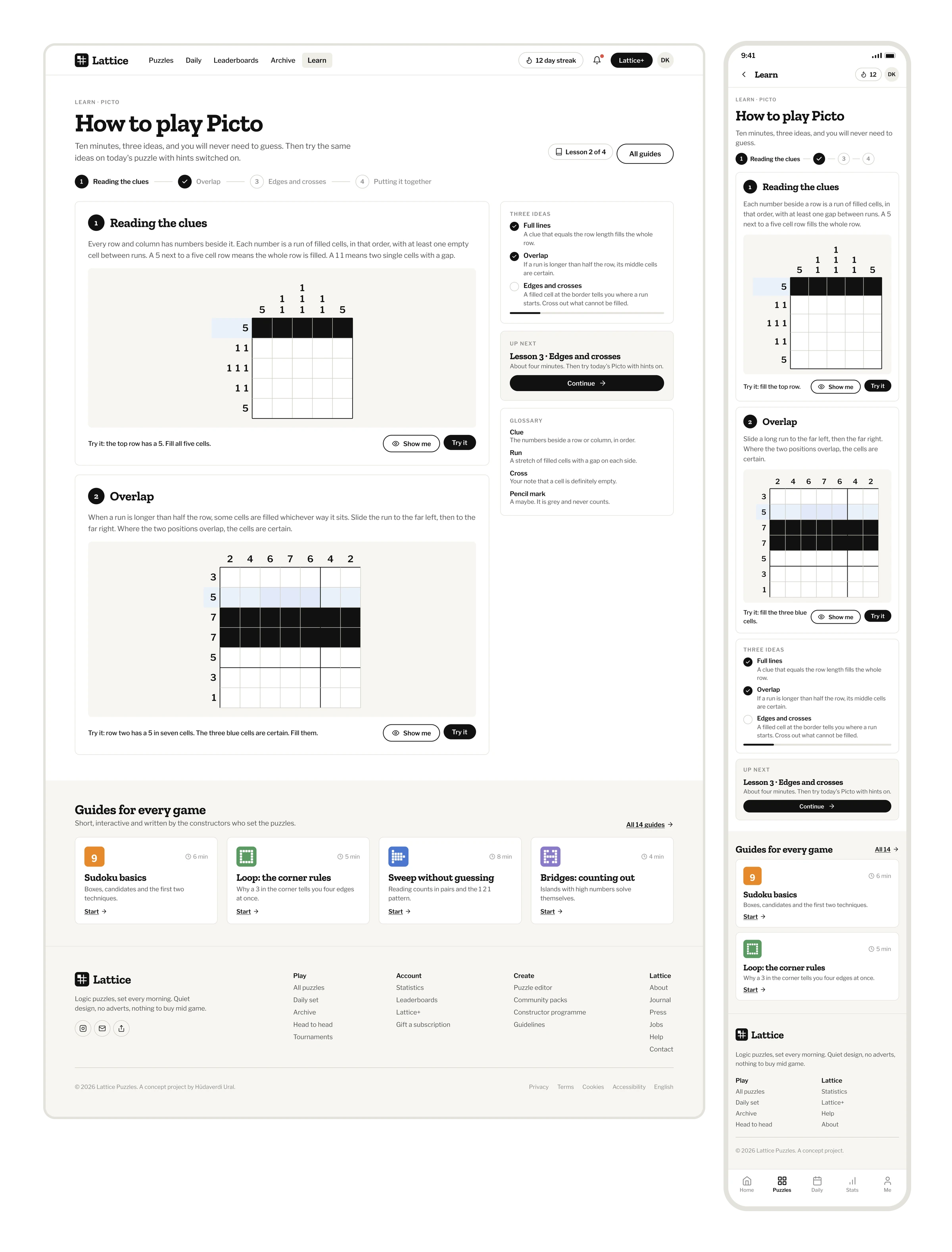
Lessons with a live board. Every idea is tried before it is explained twice: read the clue, press Show me, then try it yourself on the same grid. Guides for the other games follow.
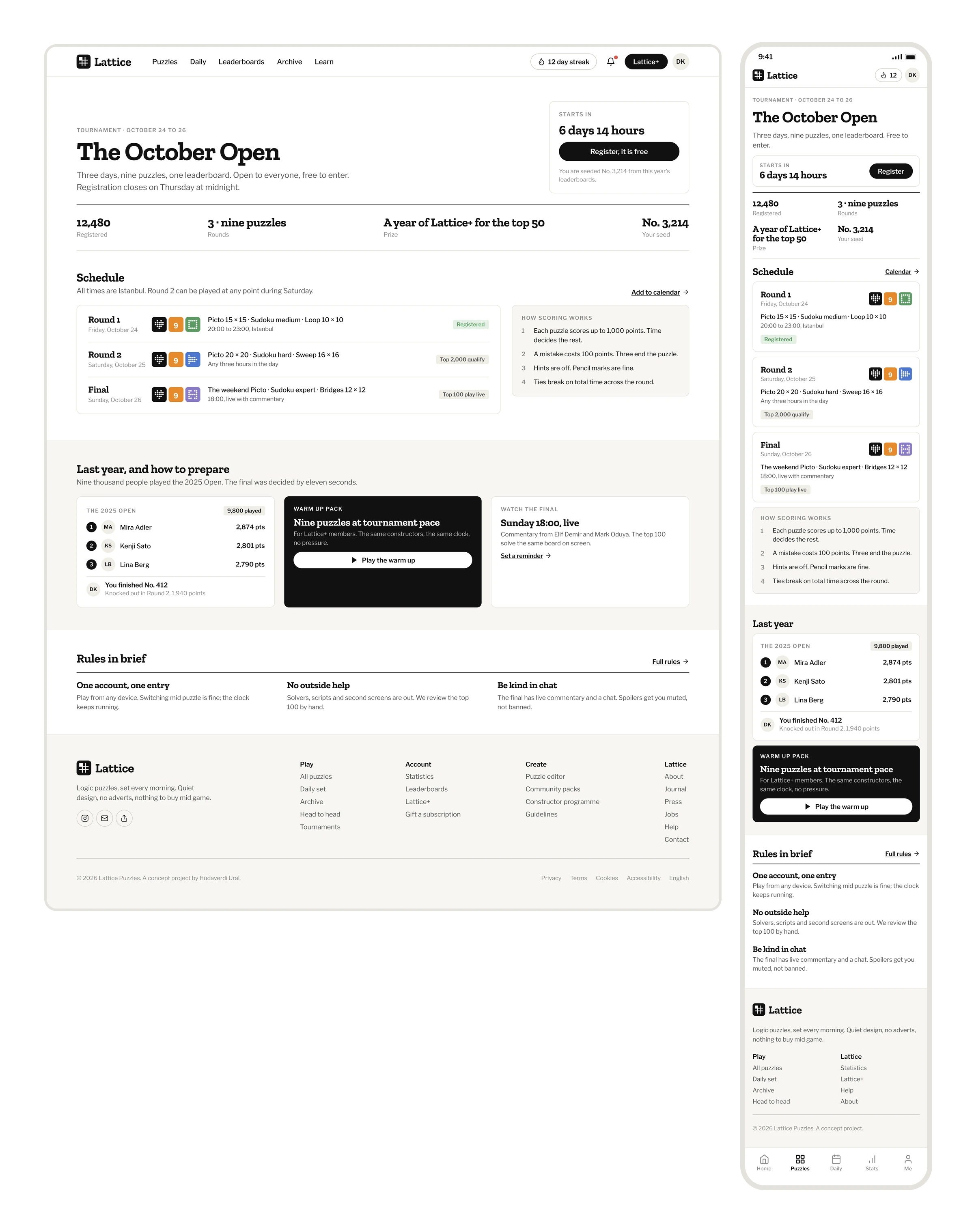
The October Open
A tournament page that reads like a schedule, because it is one. Three rounds with their dates, games and qualifying line, scoring in four short rules, last year’s top three and a warm up pack.
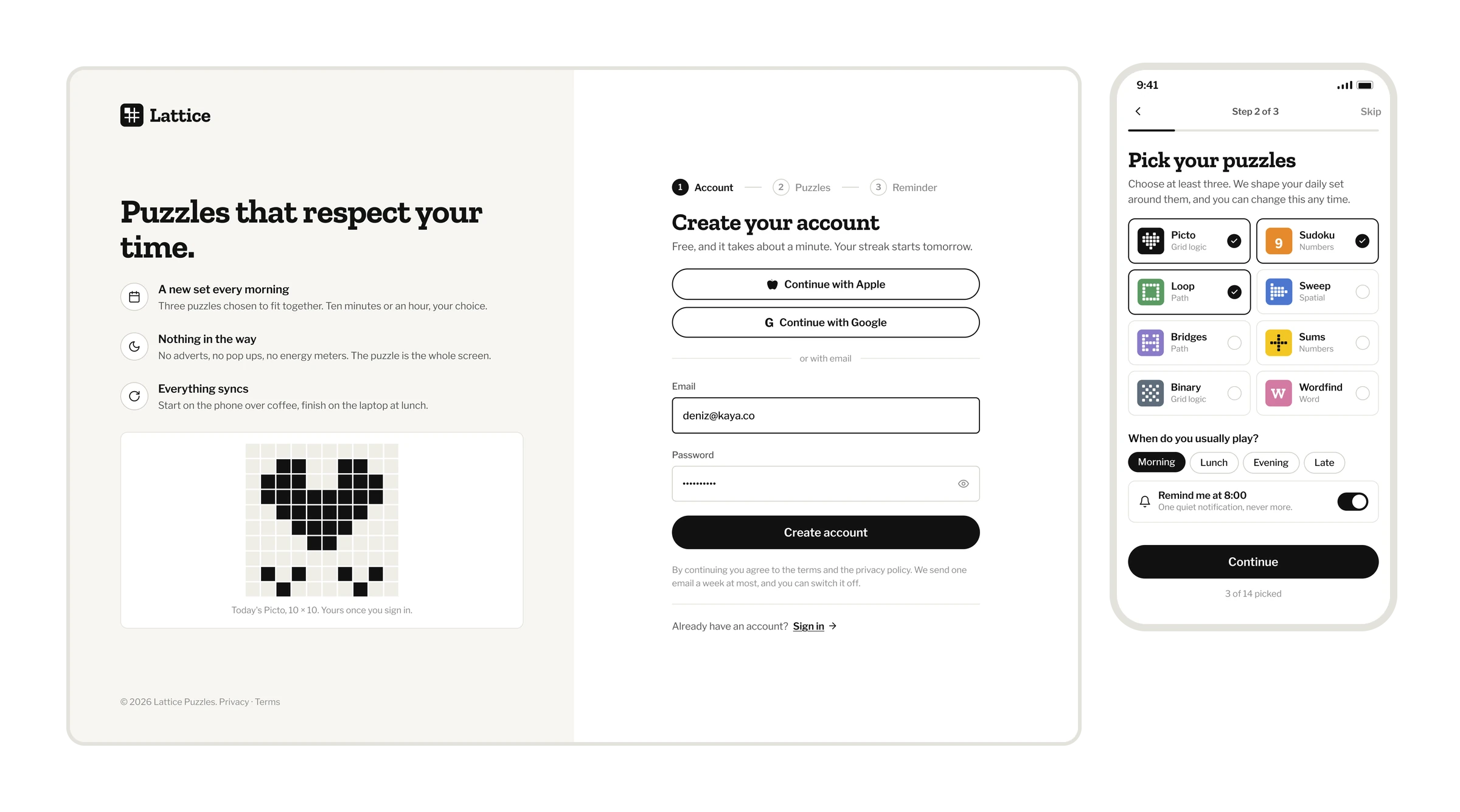
Onboarding
Create an account, pick your puzzles, set one reminder. Apple, Google or email on the first step, at least three games on the second, and a single quiet notification at the time you usually play.
Outcome
Lattice showed me how much a quiet interface can carry when the content is already the reward. With hairlines instead of boxes and one accent per game, fourteen puzzles share a page without shouting over each other, and every colour you see means something. The hardest part was saying no: no adverts, no energy meters, no pop ups between puzzles, and a subscription that explains itself on its own page. Lattice is a personal concept. The games are classic logic puzzles under new names, and every screen, icon and line of copy was made for this study.