Product Designer
Lull
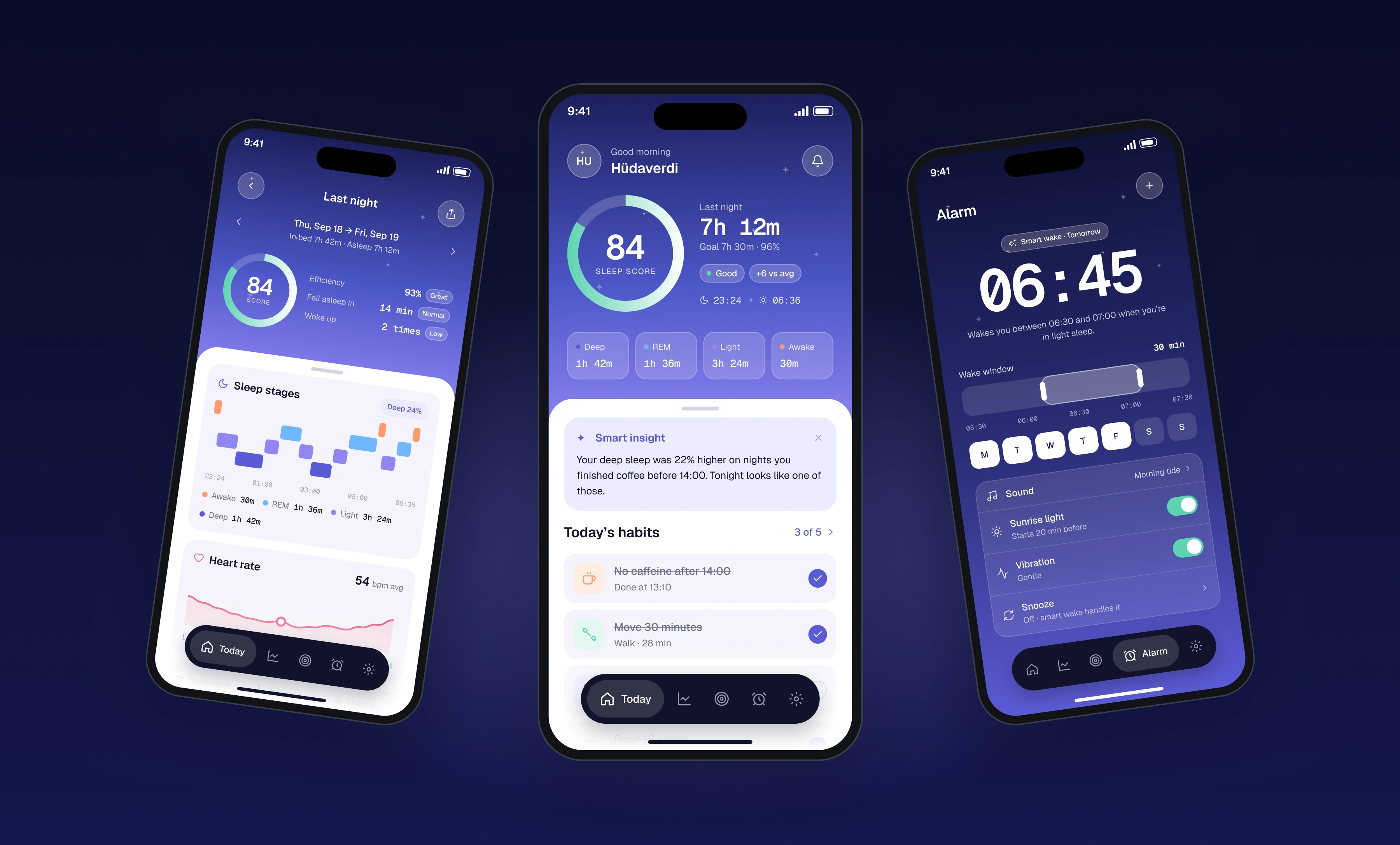
Lull is an iOS app that turns sleep data into small, doable habits. Most sleep apps stop at a score; I wanted to connect that score to the habits that actually move it. The evening is dark and quiet, the morning bright and short.
Overview
Every insight ends with an action. Night screens use a dark gradient while morning screens stay light. Times and numbers are set in a monospaced typeface so the data lines up, and mint, the single accent, marks progress.
Screens
Onboarding
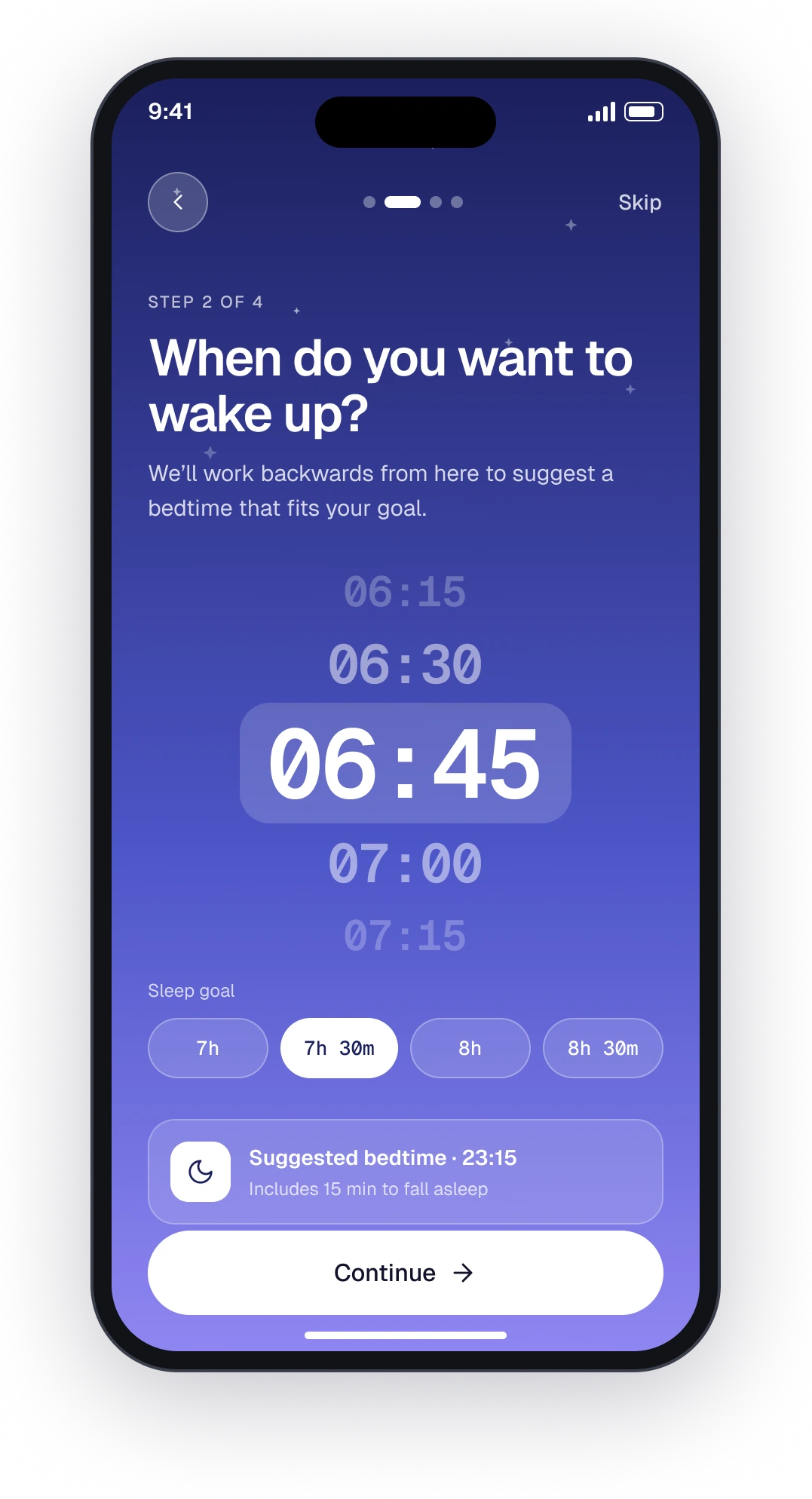
Wake time first, then the sleep goal. The app proposes the bedtime.
Today
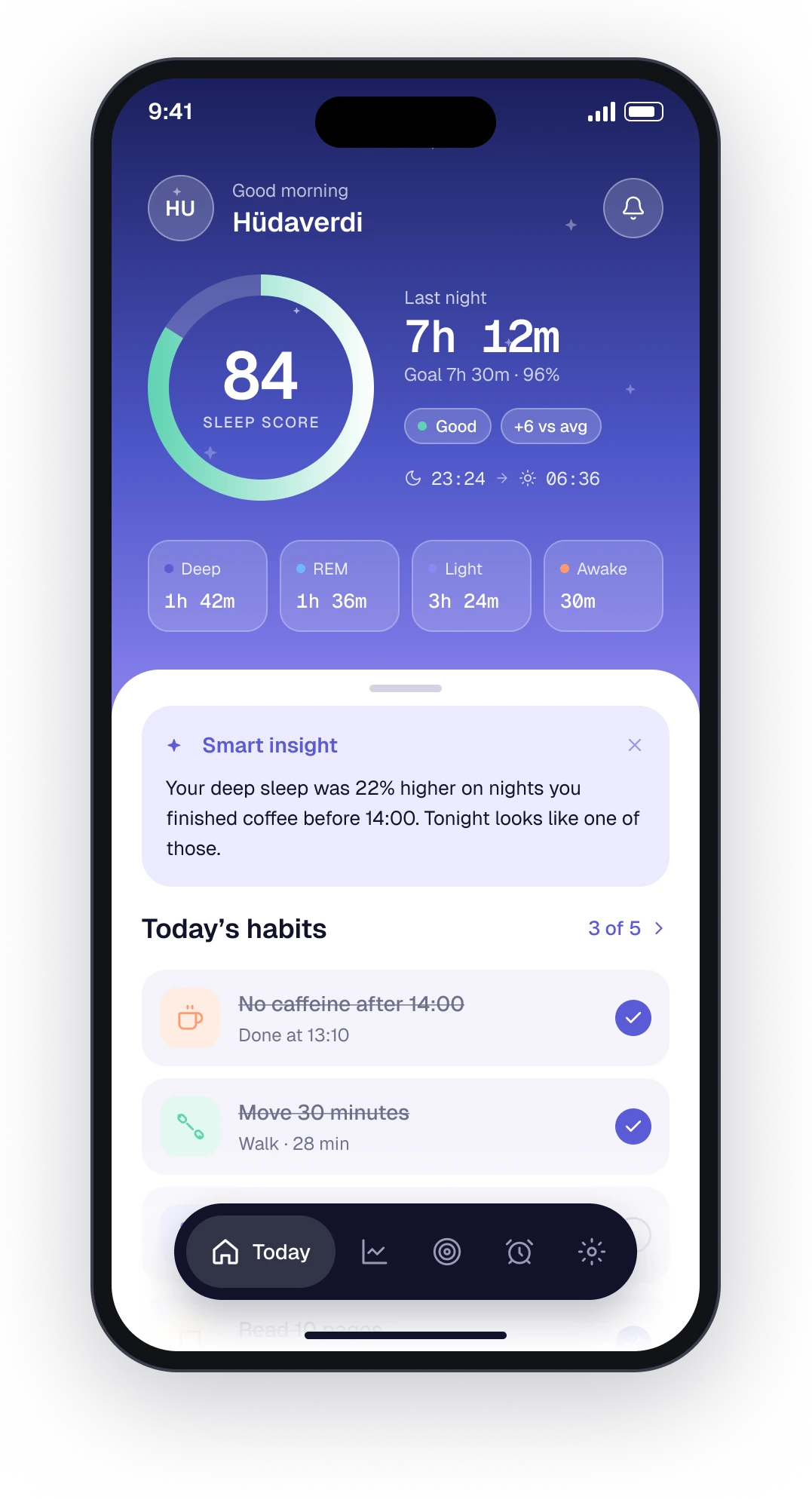
Last night's score up top, today's habits right below. The insight card connects the two.
Night Detail
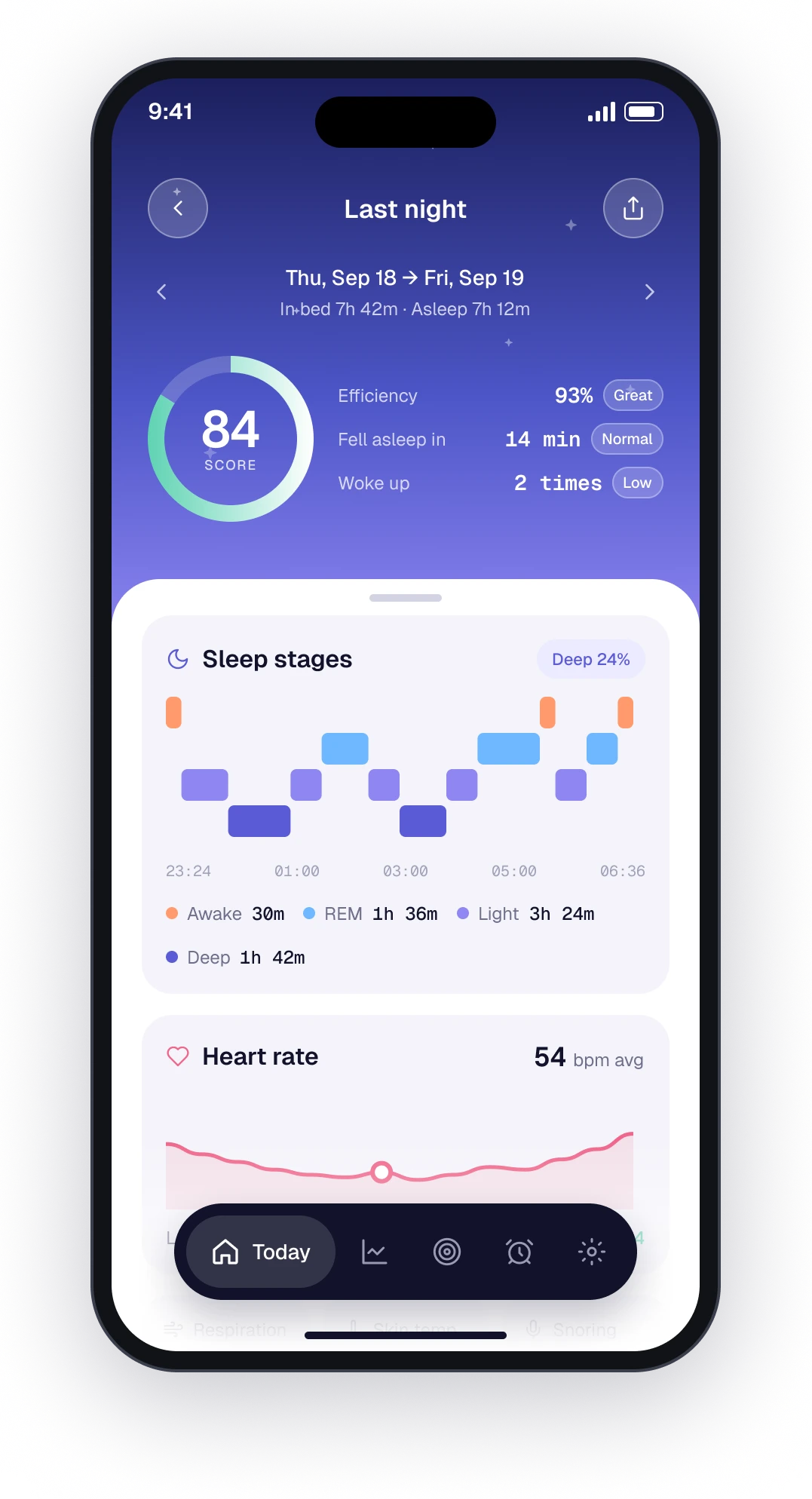
A readable hypnogram, heart rate through the night and tags that explain how the night went.
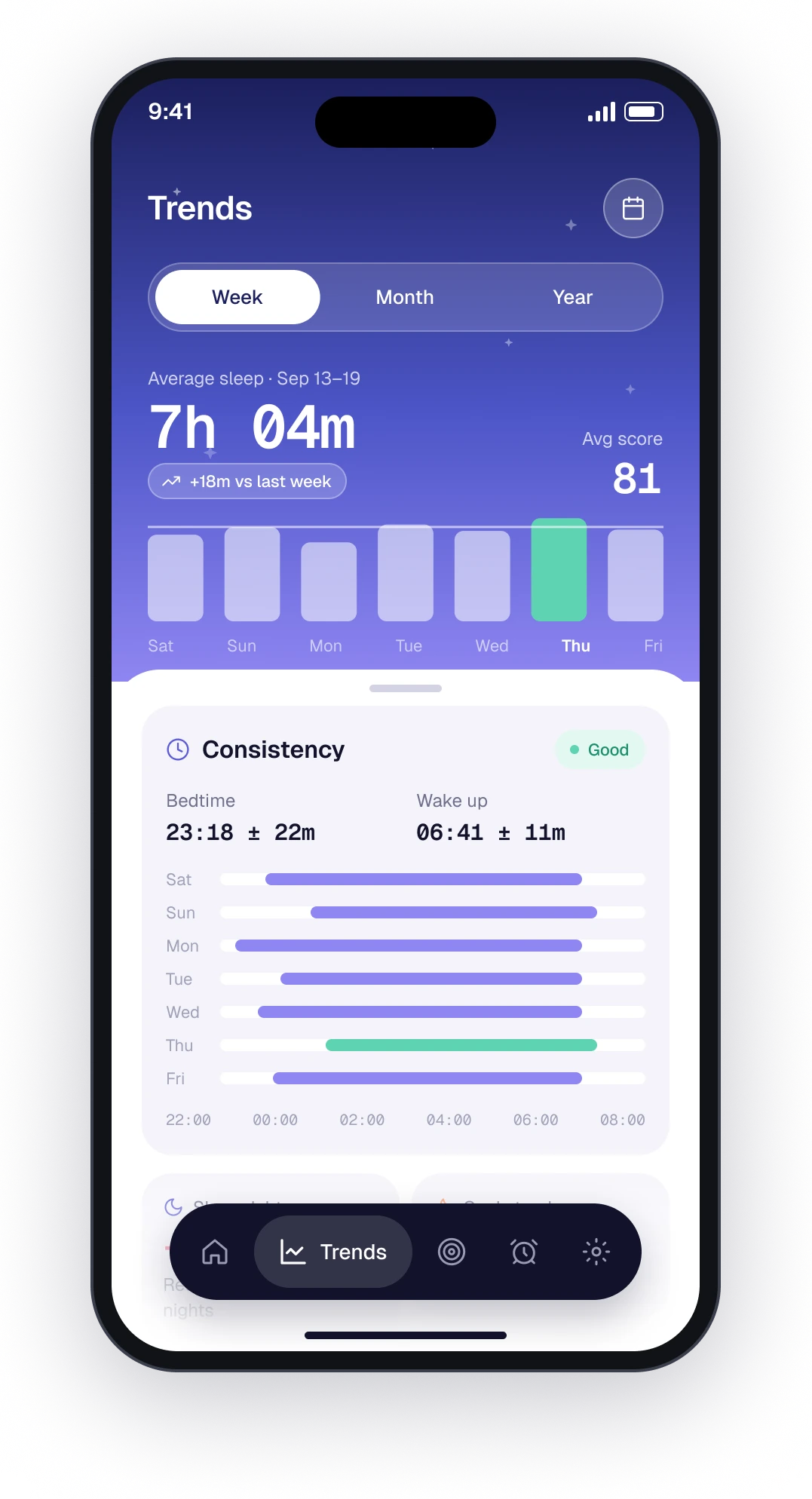
Weekly Trends
Seven bars against the goal line, with bedtime consistency and sleep debt at a glance.
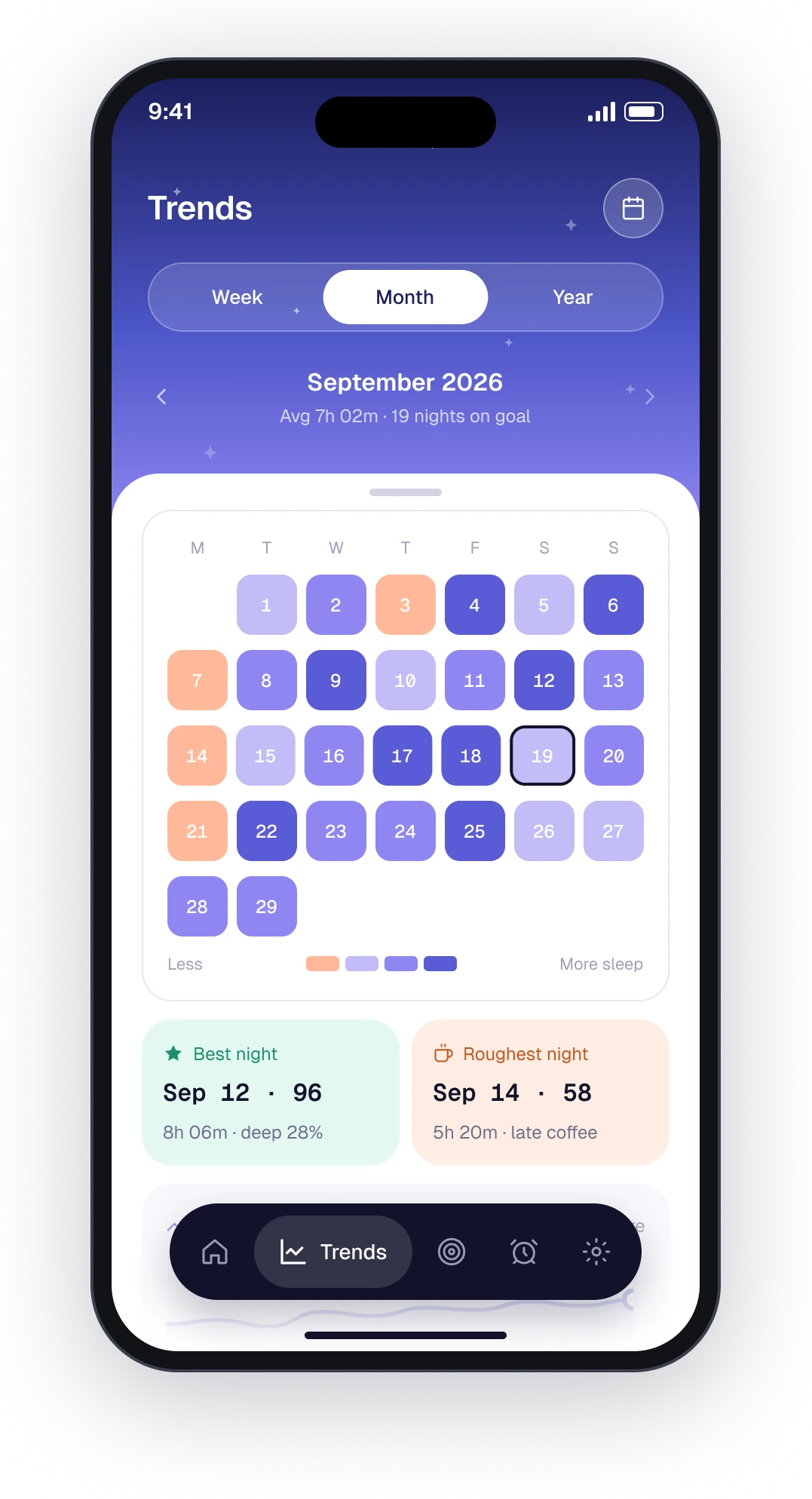
Monthly View
A heat map calendar, the best and roughest nights, and the score trend across months.
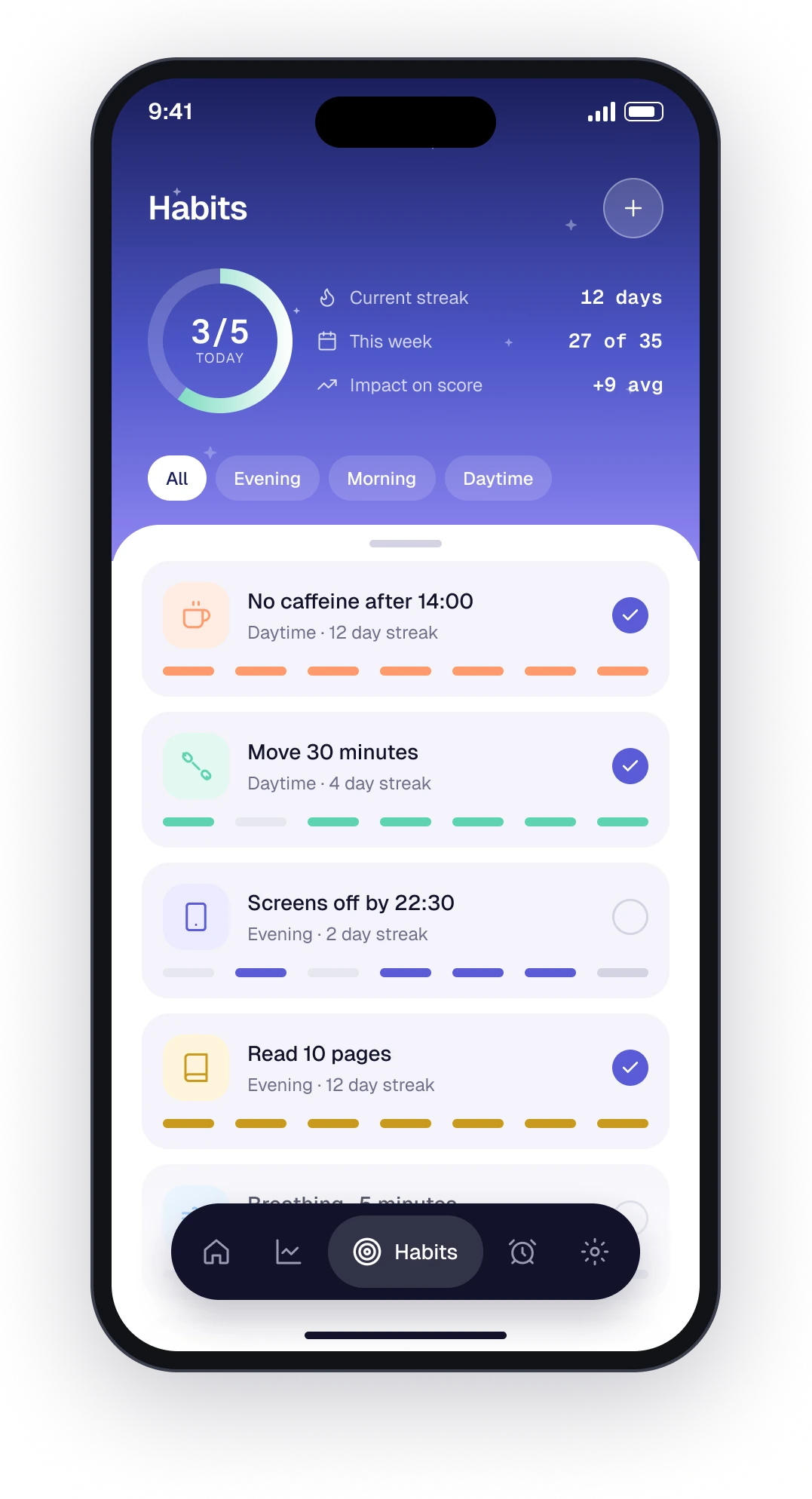
Habits
Each habit shows its streak and the last seven days. Categories filter by time of day.
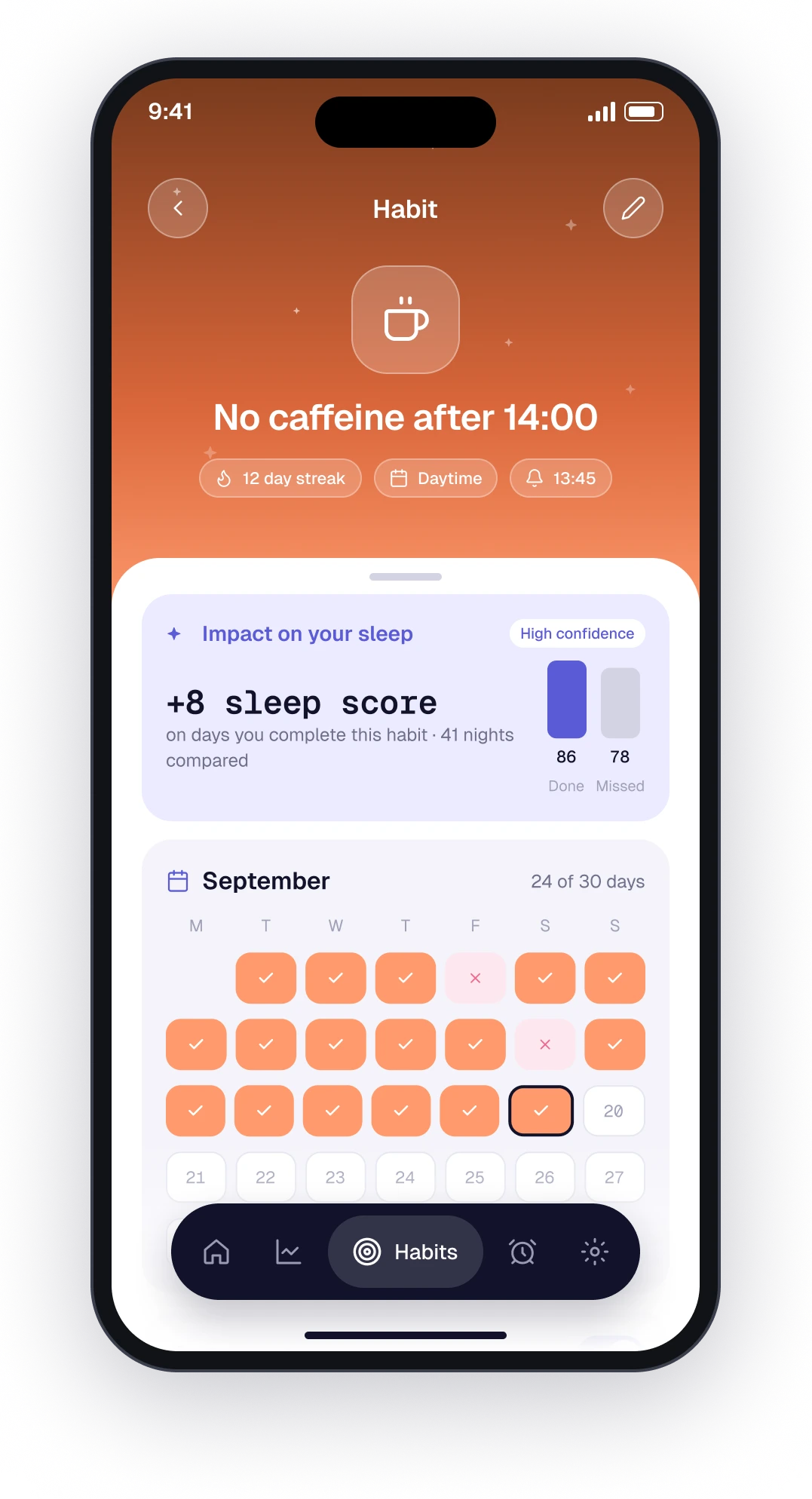
Habit Detail
The habit's effect on the sleep score in real numbers, with a completion calendar and reminders.
Wind-down Routine
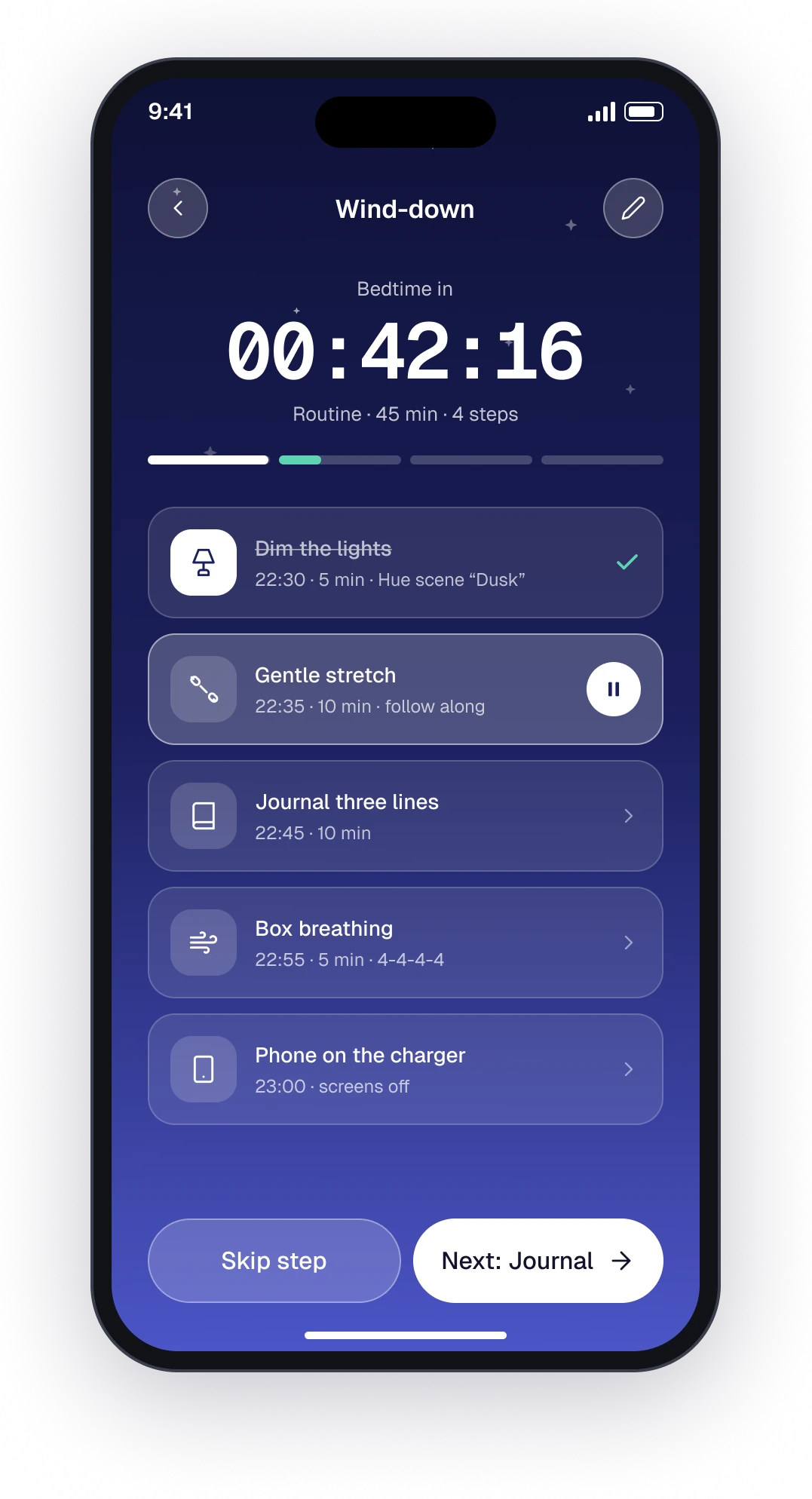
A countdown to bedtime and a step by step routine, with one step active at a time.
Smart Alarm
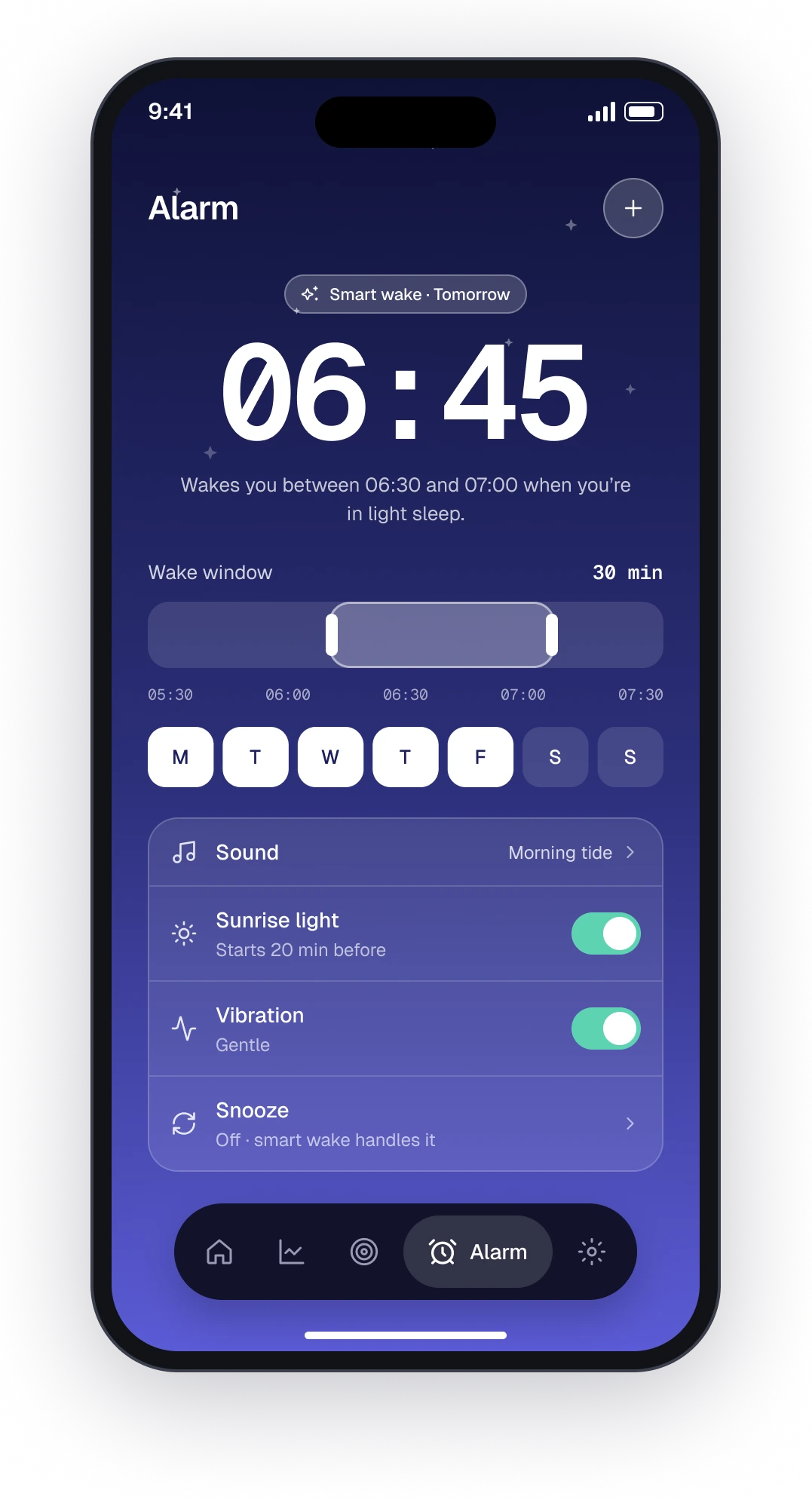
A wake window instead of a fixed time. Sound, sunrise light and vibration sit as simple rows.
Insights
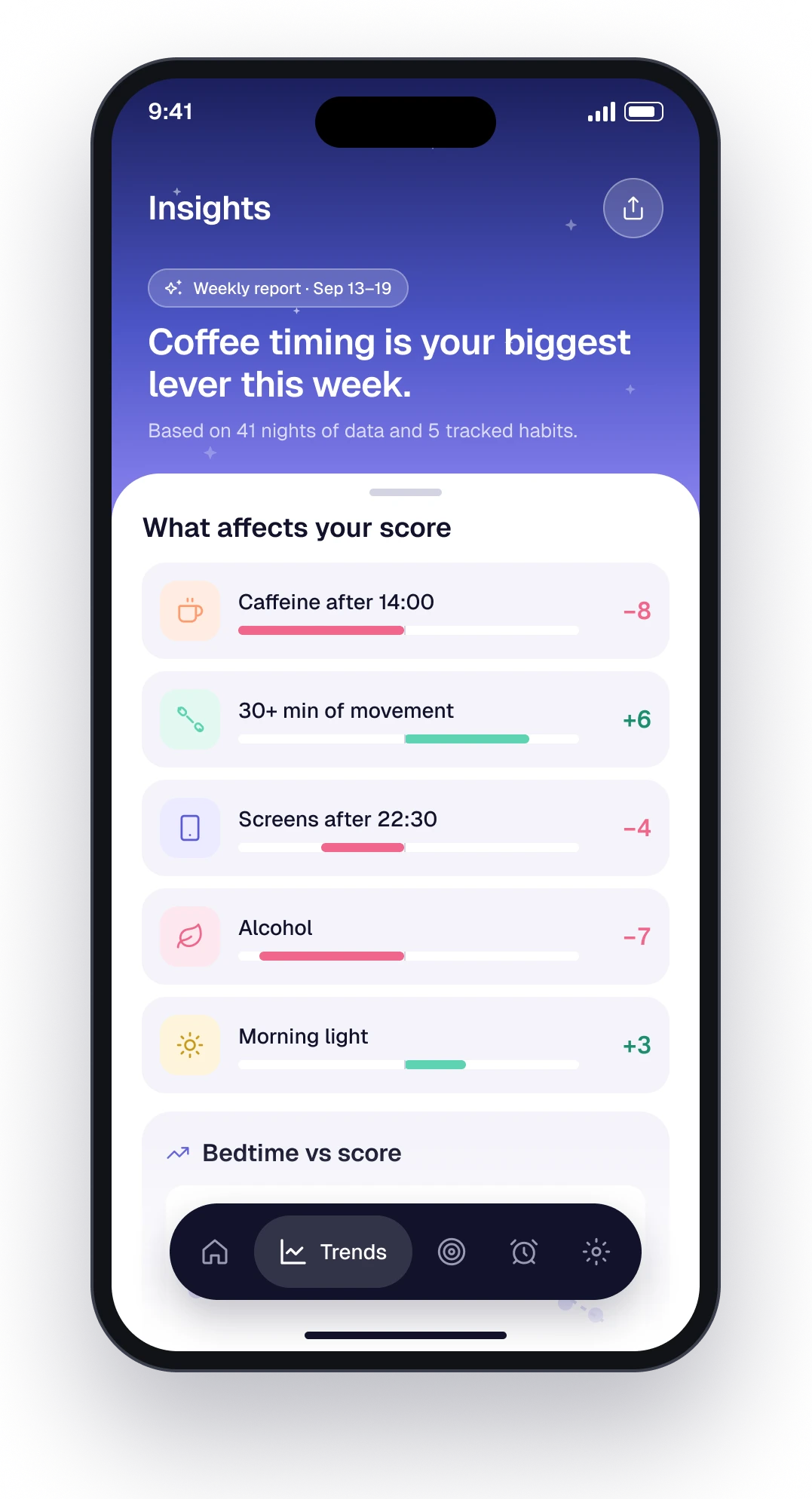
Which habits move the score and by how much, plus a bedtime sweet spot. Every card ends with a suggestion.
Devices and Sync
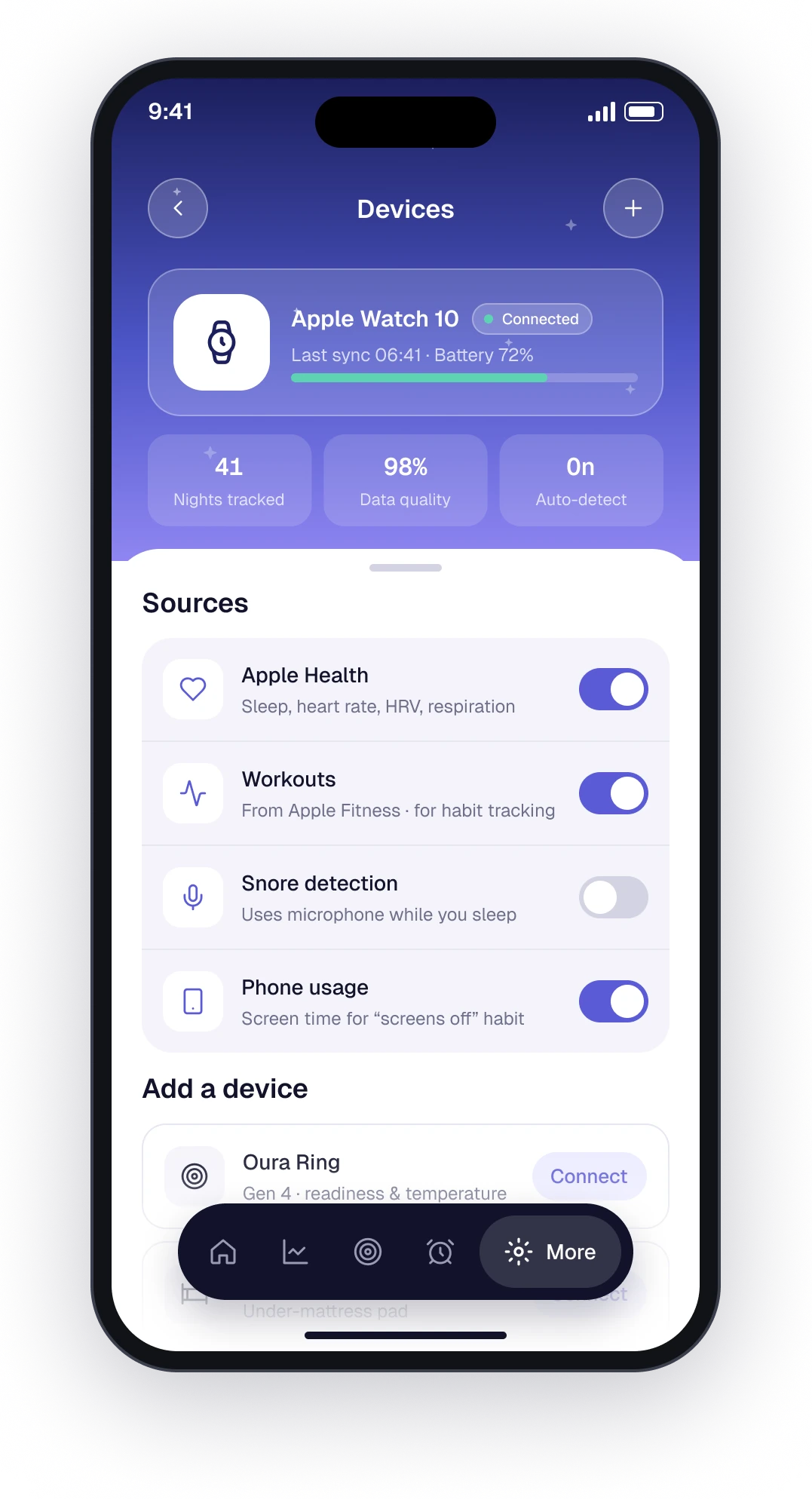
Watch connection, data sources as toggles and one sentence on where health data lives.
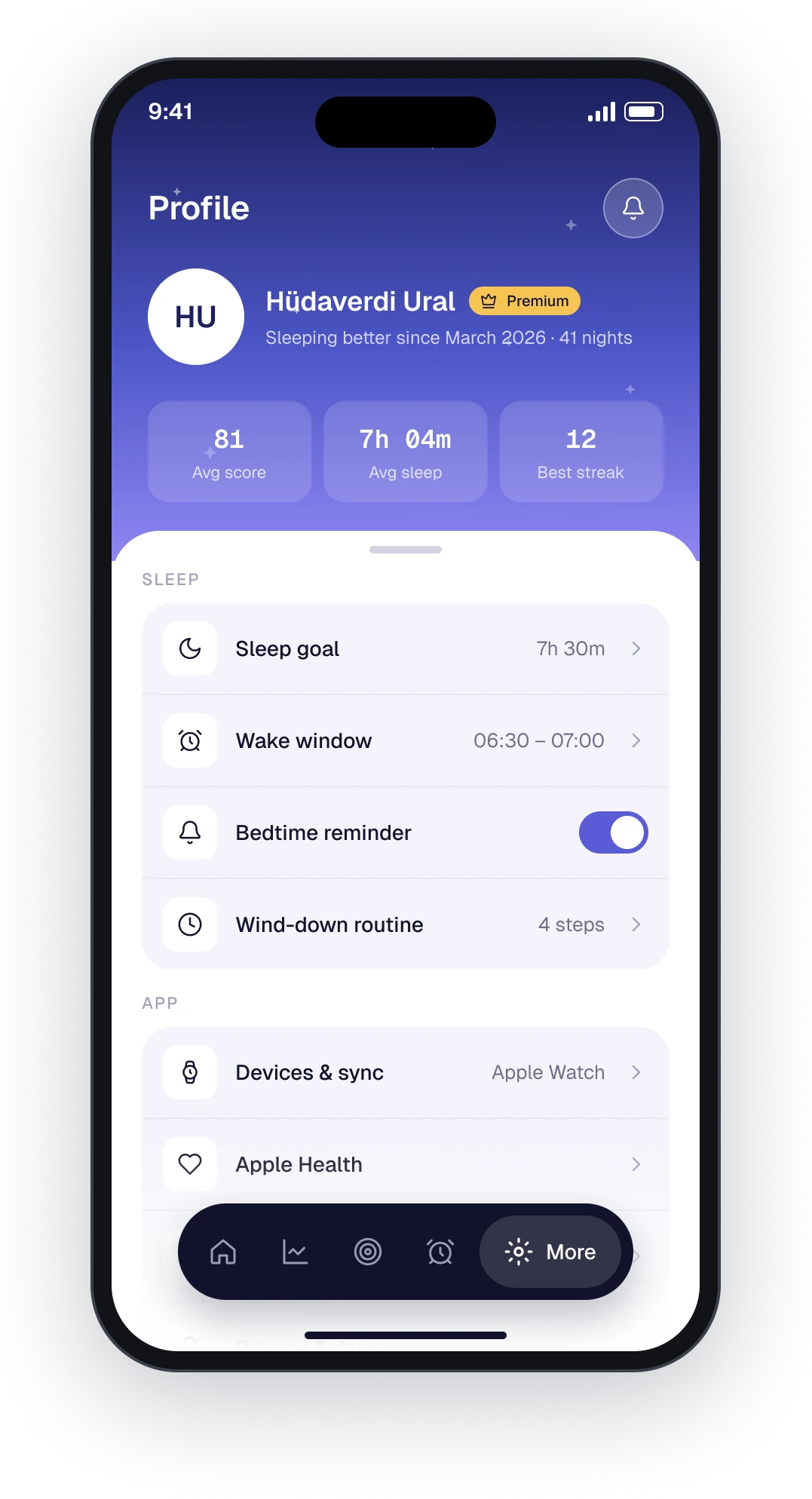
Profile and Settings
Sleep goal, reminders, devices and account in grouped lists. Nothing is more than one tap deep.
Outcome
The hardest part of this project was making the data meaningful without making it intimidating. I tried to simplify charts like the hypnogram and the impact bars while never hiding the numbers behind them.