When a Painting Looks More Real Than a Photograph
Some paintings make your brain resist the fact that they are paintings. Leng Jun’s Portrait of Xiao Jiang is one of them. What caught my attention first was not the face, but the almost tangible texture of the green sweater. After a while, one question remains: why can a painting feel more real than a photograph?

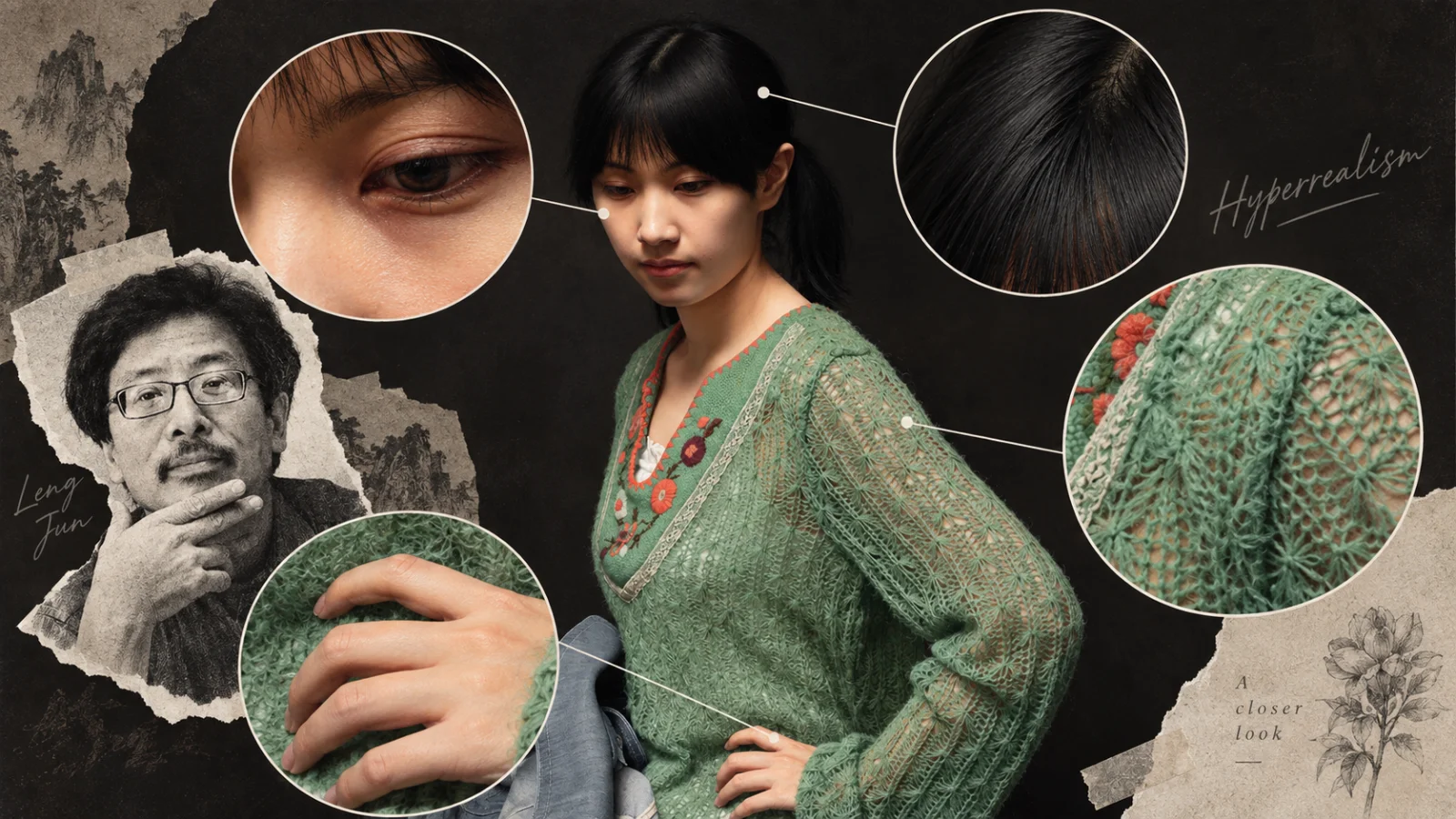
After looking at it for a while, I stopped asking the obvious question, “How did he paint this?” The more interesting question became why a painting this realistic feels so different from a photograph. A photograph can record detail instantly, while a painting has to rebuild it slowly. That difference sounds simple, but I think it explains a lot about why hyperrealism can feel both impressive and slightly unsettling.
Leng Jun and the portrait that keeps being mistaken for a photo
Leng Jun was born in Sichuan, China, in 1963 and studied fine art in Wuhan. He became known for paintings and drawings with an unusually high level of realism. Birmingham City University, which awarded him an honorary doctorate in 2018, describes his work as so detailed that some passages reward close inspection or magnification. One example the university gives is almost absurdly specific: the shadow cast by a single sweater thread on the model's skin. That is a good way to understand his approach. He does not treat texture as decoration around the subject; texture becomes part of the subject itself. Birmingham City University
Portrait of Xiao Jiang was painted in 2011 and measures 120 by 60 centimetres. Taikang Art Museum, which holds the work in its collection, points to the green sweater, the soft light on the model's skin and the detailed treatment of her hair as important elements of the portrait. The museum says the work took more than a year to complete, while a later report from William Paterson University quotes Leng saying it took nine months. The two institutional sources do not give exactly the same duration, so I would not build the whole story around a precise number. What both versions tell us is more useful anyway: the painting was made slowly, through prolonged looking rather than a quick capture. Taikang Art Museum William Paterson University
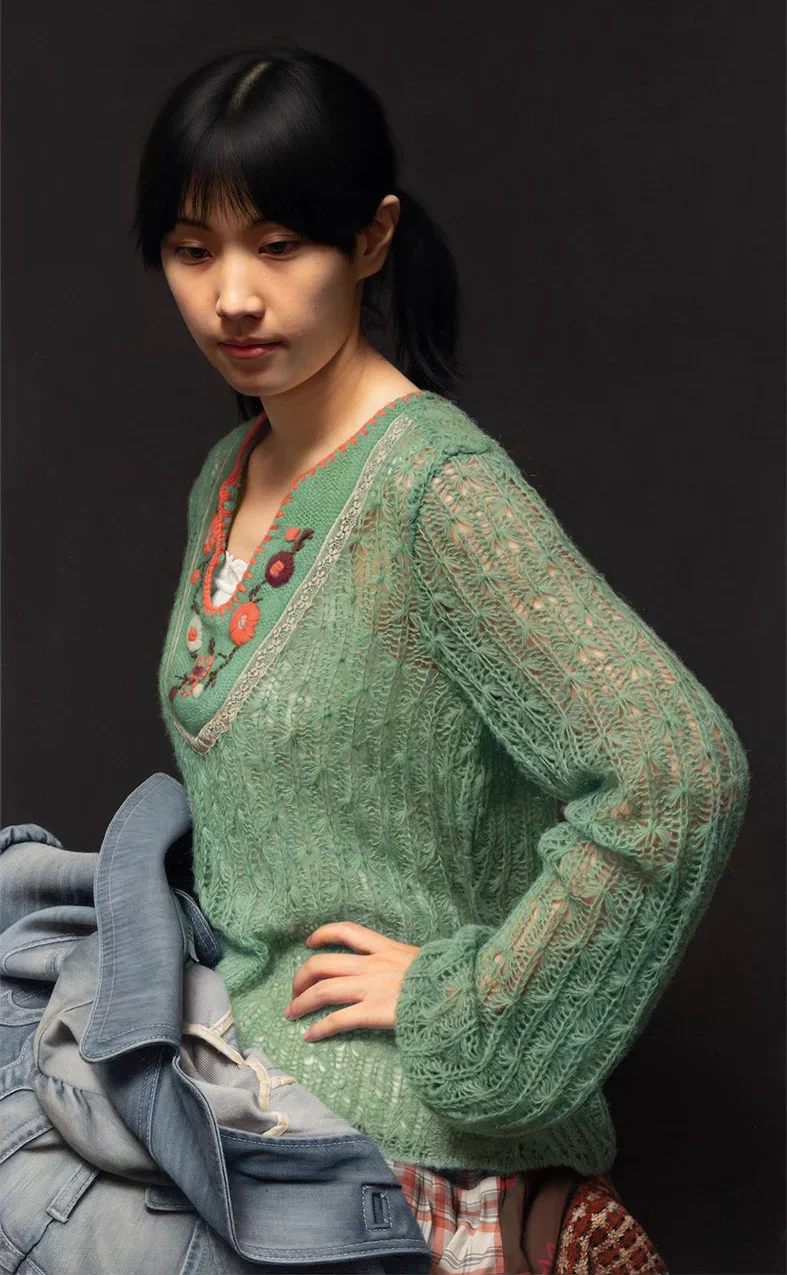
The painting also became a major market success. In 2019, Portrait of Xiao Jiang sold at China Guardian for RMB 70.15 million, reported at roughly US$10.15 million. That figure helps explain why the work appears so often in articles and social posts, but I find the price less interesting than the visual reaction it creates. A price tells us that collectors valued the work; it does not explain why someone who knows nothing about the auction market stops scrolling when the image appears. That reaction comes from the uncomfortable border between painting and photography. Artnet Global Chinese Art Auction Market Report 2019
Hyperrealism is not simply “painting very well”
Hyperrealism developed from the wider rise of photographic realism in the late 1960s. Museo Nacional Thyssen-Bornemisza describes artists in the United States using photographs as the basis for highly precise paintings of ordinary scenes and objects, with the approach gaining international recognition during the early 1970s. The technique later spread beyond that first generation, but the basic fascination remained: familiar reality could be reconstructed with enough precision that the viewer began to question what kind of image they were looking at. Museo Thyssen-Bornemisza
It is very easy to reduce all of this to technical ability. Obviously, technique matters; a portrait like Leng Jun's requires extraordinary control. But hyperrealism becomes much more interesting when it stops being treated as a competition with photography. A camera captures a huge amount of information in an instant, while a painter has to decide what deserves time. Every edge, reflection, pore, crease and colour shift has to be reconstructed. Even when the goal is to make the painter's decisions invisible, those decisions are still there.
That is why a hyperrealist painting can sometimes feel more intense than the thing it represents. Reality contains endless detail, but we do not normally notice all of it at once. The painting gathers selected details, holds them still and makes them available for inspection in a way everyday vision rarely does. In that sense, hyperrealism is not only about copying reality. It is about editing our attention.
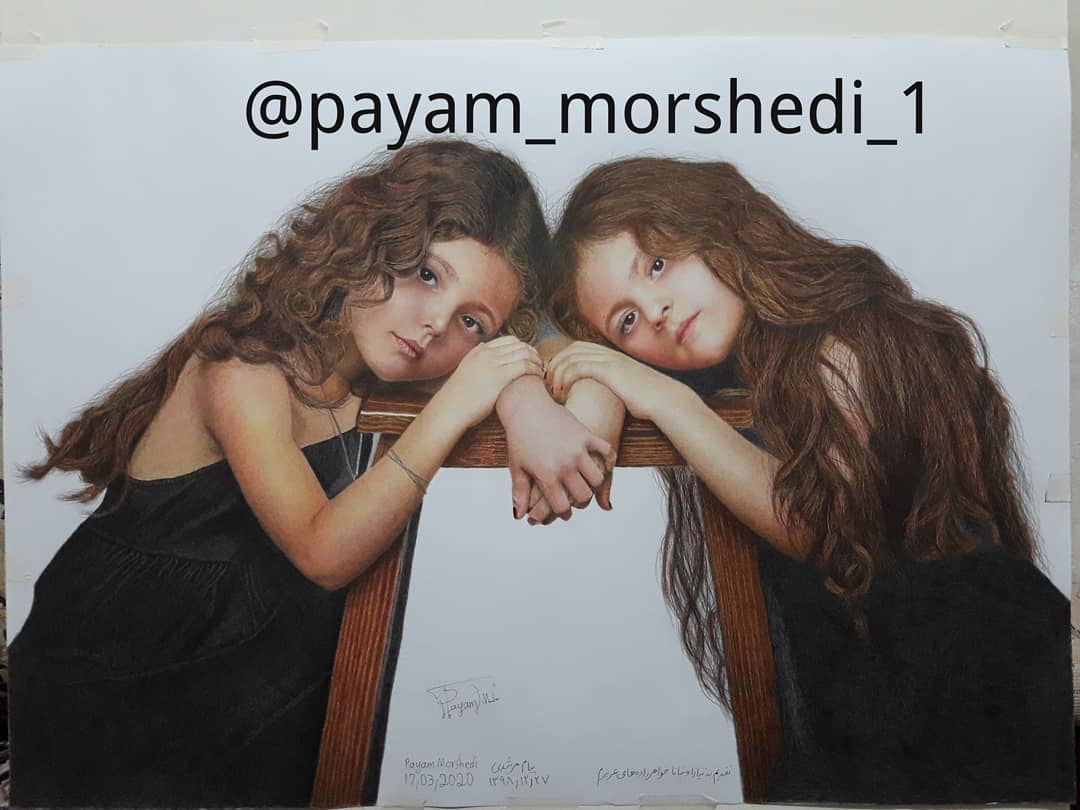
Why can more detail feel more real?
This is the part of hyperrealism I find most interesting. We do not actually see the world as a perfectly sharp image from edge to edge. Our eyes move constantly, our attention jumps, and some things become clear while others fade into the background. A hyperrealist painting can break that normal rhythm by giving several areas of the image an unusual amount of information at the same time. A surface that would register in daily life as simply “a green sweater” suddenly becomes hundreds of fibres, shadows and tiny gaps. Skin stops being a colour and becomes a collection of pores, reflected light, soft edges and temperature changes.
The strange result is that an image can feel more real because it does not match the way we normally look. It lets us inspect reality without reality moving away from us. A person will not remain perfectly still while we study every hair, the light will change, and our own concentration will break. A painting does not care about any of that; it simply waits. I think this is part of the reason hyperrealism continues to attract people even after photography has made accurate representation technically easy.
There is something almost luxurious about this kind of attention today. Most images I see during the day survive on my screen for only a few seconds before I move to the next one. Hyperrealism is built around the opposite idea. It asks us to stay longer, move closer and notice things that would normally be ignored.
The strange value of visible patience
I also think we respond to the time contained in these paintings. We cannot literally see nine months or a year sitting on the surface of a canvas, but we can sense that the image was not produced quickly. The density of tiny decisions gives the work weight, particularly now that convincing images can be generated in seconds. That contrast probably makes works like Leng Jun's feel even more extreme today than they did twenty years ago.
Slow work is not automatically better work, of course. Effort alone does not give an image artistic value, and an exhausting process can still produce something uninteresting. But visible patience changes the way I approach an object because it suggests that somebody else has already spent an extraordinary amount of time looking at it. I start to look more carefully too. Leng Jun has said that he is not simply pursuing similarity with the model, but uses oil painting to express his feelings toward the subject. That makes sense to me, because if similarity were the only purpose, photography would have solved the problem a long time ago. William Paterson University
The interesting part is what happens after observation passes through a person. Two artists can look at the same subject and still produce different realities, even when both are aiming for extreme accuracy. The decisions may be subtle, but they remain decisions.
Hyperrealism does not need a human face
Portraits are the easiest examples to share because we are naturally sensitive to human faces. We quickly notice whether skin, hair or eyes feel convincing, so a realistic portrait produces an immediate reaction. But I think the idea behind hyperrealism becomes clearer when the subject is an object or a place. Reflective metal, shop windows, food, worn surfaces and ordinary interiors can suddenly become important simply because somebody has decided to observe them at an unusual level of intensity.
That shift matters because the style is no longer saying only, “Look how realistic this is.” It can also say, “Look at this ordinary thing again.” A surface that would normally be visual background becomes the main event, and details we would never remember from daily life become the reason to keep looking. That is where realism becomes less about imitation and more about attention.
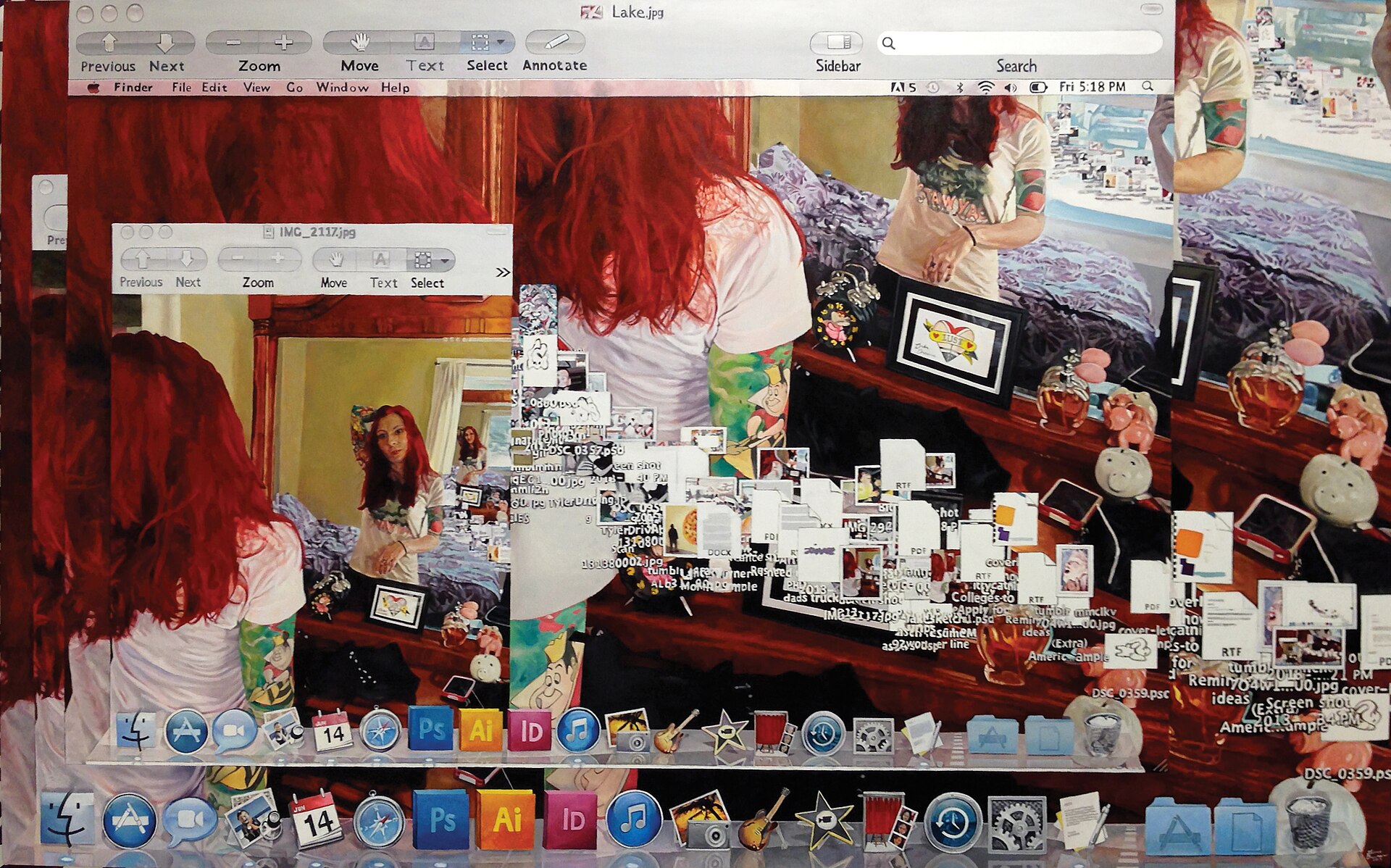
For me, this is also where hyperrealism begins to connect naturally with design. Design changes attention too. It decides what should be noticed first, what deserves emphasis and what can quietly disappear into the background. The tools are different, but the underlying question is familiar: what do we want somebody to notice?
Detail is useful only when it has a reason
The easiest lesson to take from hyperrealism would be “details matter,” but I think that is too simple. More detail does not automatically create a better painting, poster, package or product. Sometimes detail adds meaning, sometimes it creates atmosphere, and sometimes it only proves that somebody had enough time to keep adding things. The important question is not how much detail exists, but what the detail is doing.
What I like about Portrait of Xiao Jiang is that the detail changes how I experience the person. The fragile texture of the sweater makes the skin feel softer, the dark background makes the face feel warmer, and the hair and fabric do not feel like separate demonstrations of technique. They all support the presence of the model. The craft is visible, but it is not completely disconnected from the mood of the image.
I think the same applies to design more broadly. In editorial design, packaging or graphic work, a small typographic choice can make an object feel carefully made. Paper texture can change the way a printed piece is perceived, while an illustration style can give otherwise ordinary information a personality. These things do not have to shout to be useful. Good detail often starts working before we consciously notice it.
And finally, interfaces
I would not try to turn Leng Jun into a UX lesson because that would shrink the subject into something it was never meant to be. Still, there is one connection I cannot ignore. Digital interfaces are becoming increasingly easy to make visually polished. Rounded cards, clean typography, balanced spacing, gradients and smooth shadows can now be produced almost instantly, which means surface quality by itself is becoming cheaper.
Hyperrealism reminds me that precision and attention are not the same thing. In an interface, attention means understanding which information matters, how someone reads it, what happens when they make a mistake, what should remain visible and what can safely disappear. A perfectly polished screen can still feel empty when those decisions are missing. The same is true in almost every field of design: finish is valuable, but finish without observation is just finish.
Maybe that is the most useful thing I take from Leng Jun's work. The lesson is not that we should add more detail. It is that detail becomes meaningful after somebody has actually looked. A photograph can be taken in a fraction of a second and today an interface can appear in seconds too. The interesting work starts after that first result, when somebody decides what deserves to stay, what needs to change and what is worth looking at again.
Sources
- Portrait of Xiao Jiang — Taikang Art Museum Official collection page for the 2011 painting and its visual details.
- Demonstration of Oil Painting by Leng Jun — William Paterson University Leng Jun discusses his process and the time spent on Portrait of Xiao Jiang.
- Honorary doctorate for Leng Jun — Birmingham City University Biography and description of his painting technique.
- Hyperrealism 1967–2012 — Museo Nacional Thyssen-Bornemisza Background on the development of hyperrealism.
- Global Chinese Art Auction Market Report 2019 — Artnet / CAA Records the 2019 sale of Portrait of Xiao Jiang for RMB 70.15 million.
- Hyperrealism painting by Payam Morshedi — Wikimedia Commons CC BY-SA 4.0 supporting image.
- Lake by Lance Turner — Wikimedia Commons CC BY 4.0 supporting image.